Warm Transfer vs Cold Transfer: Which Wins for Pay-Per-Call?
Warm transfer vs cold transfer, compared: how each call handoff works, when to use them, and which one protects billable-call duration and buyer conversion.

Rafael Hernandez
Founder & CEO
Ex-Microsoft SWE · $10M+ PPL ad spend
I hope you enjoy reading this blog post. If you want to try Lead Distro AI for free, click here.
Author: Rafael Hernandez | Founder & CEO of Lead Distro AI
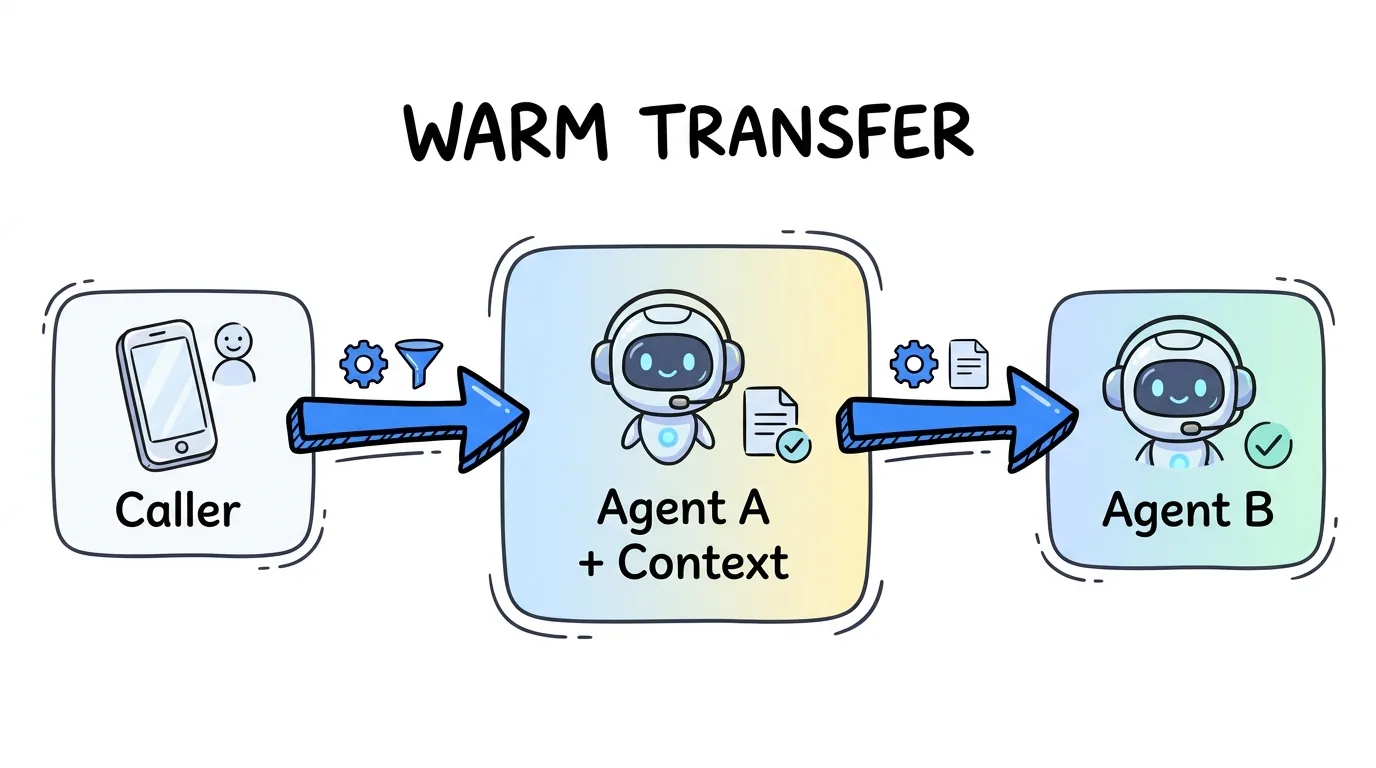
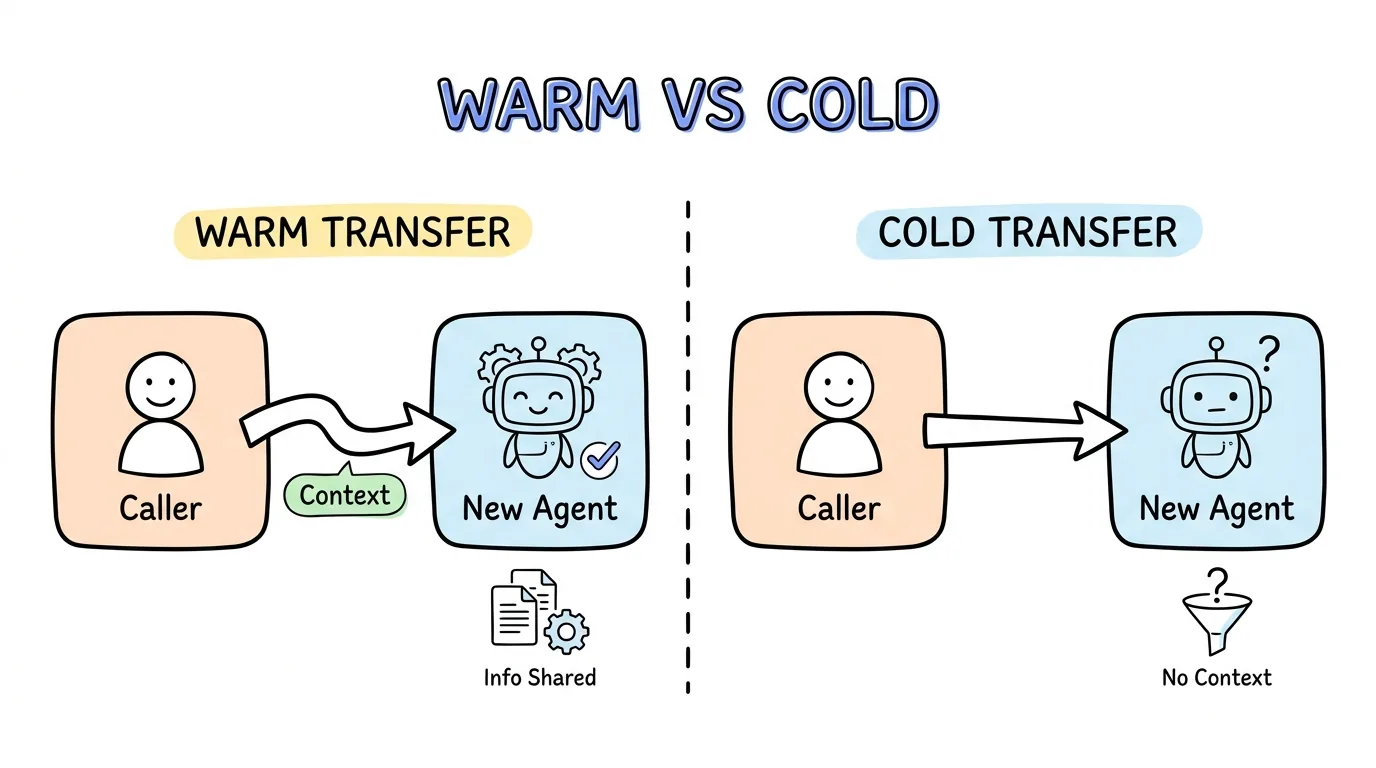
The difference in warm transfer vs cold transfer comes down to one thing: context. A warm transfer keeps the first agent on the line to introduce the caller and everything already discussed before handing off, so the receiving agent inherits a briefed, engaged caller. A cold transfer, sometimes called a blind transfer, routes the call and disconnects instantly, so the caller reaches a stranger and starts over. Warm transfers protect the caller experience and convert better; cold transfers are faster and fine for simple, low-stakes routing. For pay-per-call agencies, the choice is not cosmetic: it decides whether a billable call survives long enough to count and whether a buyer closes the lead.
That matters because phone calls are the highest-value channel most agencies own. BIA Advisory Services finds inbound calls convert to revenue 10 to 15 times more often than web form leads. A cold transfer risks that value on every handoff; a warm call transfer preserves it. This guide breaks down how each transfer works, when a cold transfer is actually the right call, and how modern routing platforms automate the warm handoff at scale.
Key Takeaways
- A warm transfer passes the caller plus their context; a cold transfer passes only the call. That single difference drives every downstream gap in satisfaction, resolution, and conversion.
- Cold transfer and blind transfer mean the same thing: the first agent routes the call and drops off with no introduction, so the caller re-explains everything.
- Warm transfers win whenever the caller has intent, an account, or value on the line; cold transfers win for high-volume, low-stakes redirects like a wrong-extension dial.
- In pay-per-call, warm transfers protect billable-call duration and buyer conversion, which is why warm-transferred leads command the highest payouts in the market.
- Both handoffs can be automated. A routing platform attaches caller data to the transfer so the receiving buyer opens the conversation already briefed, without a manual introduction on every call.
Warm Transfer vs Cold Transfer: The Core Difference
A warm transfer is a call-handling method where the first agent stays on the line, introduces the caller and their context to the receiving agent, and only then drops off. A cold transfer routes the call and disconnects immediately, with no introduction and no context passed. The receiving agent answers a stranger and rebuilds the conversation from zero.
The table below lays the two side by side across the factors that decide the outcome of a call.
| Factor | Warm Transfer | Cold Transfer |
|---|---|---|
| Introduction | Agent briefs the receiving party first | None, call is routed blind |
| Caller repeats themselves | No, context travels with the call | Yes, from scratch |
| Hold experience | Brief, agent returns to confirm | Often longer, no reassurance |
| First-contact resolution | Higher | Lower |
| Handling time per transfer | Slightly longer | Shorter |
| Caller satisfaction | High | Lower |
| Best for | Sales, support, qualified leads | Simple, high-volume redirects |
For the full mechanics of the winning side, our pillar guide covers what a warm transfer is and how it works step by step.
What Is a Cold Transfer?
A cold transfer is when an agent routes a caller to another agent or department and disconnects right away, without introducing the caller or passing along any context. The receiving agent picks up with no idea who is calling or why. In practice a cold transfer often means the caller sits through hold music, lands with someone new, and repeats their name, account, and issue from the top.
Cold transfers are fast and cheap to execute, which is why high-volume operations lean on them. The trade-off is friction. Microsoft's Global State of Customer Service research found that the majority of consumers get frustrated when they must explain their issue to multiple representatives, and a cold transfer guarantees exactly that. The term blind transfer describes the same behavior: the transfer happens blind, with no visibility passed between agents.
Blind Transfer vs Warm Transfer
Blind transfer vs warm transfer is the same comparison as cold vs warm, just under a different name. A blind transfer is a cold transfer: the call is sent on without an introduction. The opposite is an attended transfer, another term for a warm transfer, because the first agent attends to the handoff by conferencing in the receiving agent before leaving.
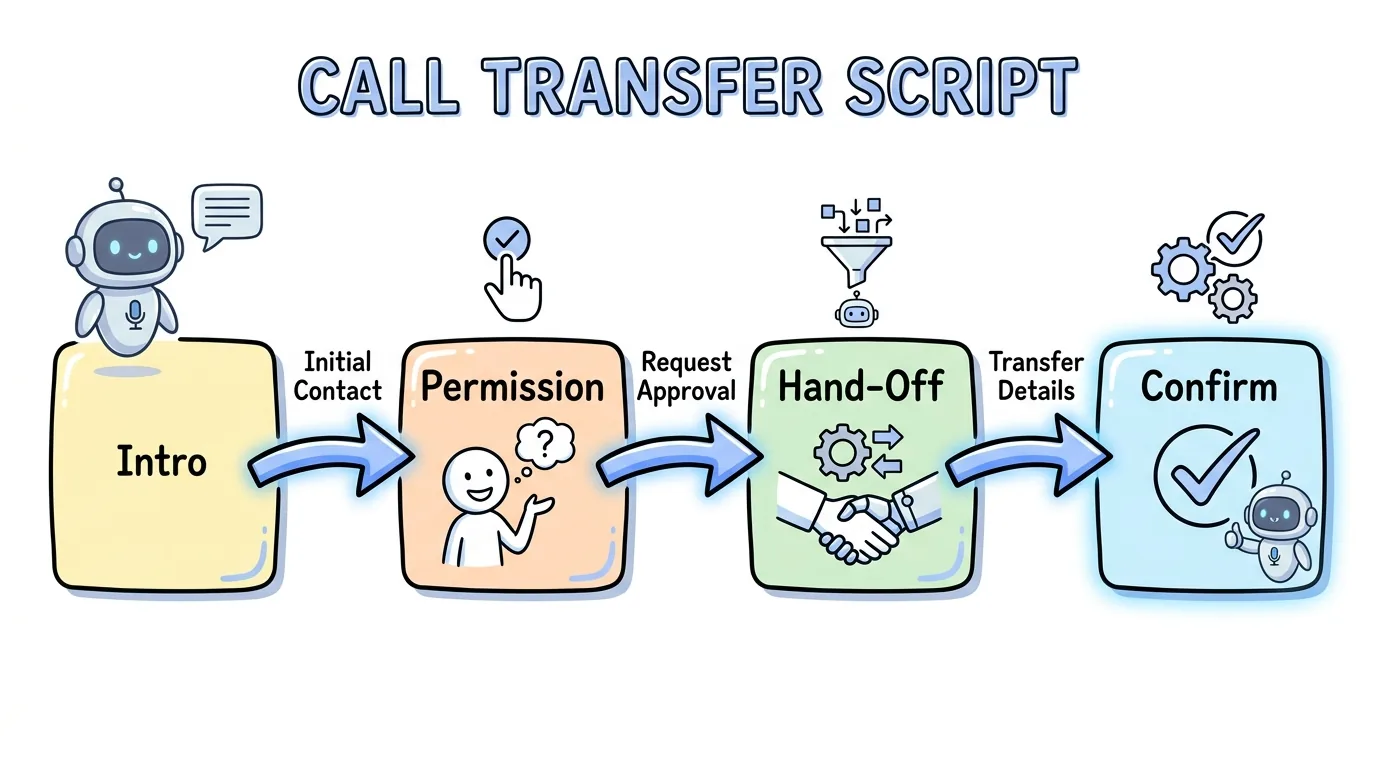
Knowing the vocabulary matters when you configure a phone system or a call routing software platform, because the settings are usually labeled "blind" and "attended" rather than "cold" and "warm." Choosing attended transfer forces the introduction step; choosing blind transfer skips it. The label changes, the mechanic does not: attended and warm both preserve context, while blind and cold both discard it.
When a Cold Transfer Is Actually Fine
A cold transfer is not a mistake in every situation. When a caller dialed the wrong extension and simply needs redirecting, a warm introduction adds no value and wastes both agents' time. High-volume, low-stakes routing, such as pointing a caller to an automated menu, a billing line, or a self-service department, is a legitimate fit for a fast cold transfer.
The decision rule is stakes. If the caller has intent, an account, an unresolved problem, or revenue attached, a warm transfer protects that value. If the call is a simple pass-through with nothing to lose, the speed of a cold transfer wins. Most contact centers use both: warm transfers for sales and escalations, cold transfers for routine redirects. The mistake is defaulting to cold for everything because it is easier, which quietly bleeds conversions on the calls that mattered.
Warm Transfer vs Cold Transfer in Pay-Per-Call
In pay-per-call, the warm transfer vs cold transfer choice hits revenue directly, and it is the angle most generic comparisons miss. Pay-per-call buyers pay for calls that clear a duration threshold, often 60 to 120 seconds of connected, billable time. A cold transfer drops the caller into a cold start, hold, and re-explanation, which burns the clock and inflates abandon rates before the billable threshold is met. A warm transfer delivers a pre-briefed, engaged caller, so the connected call sustains itself and clears the threshold.
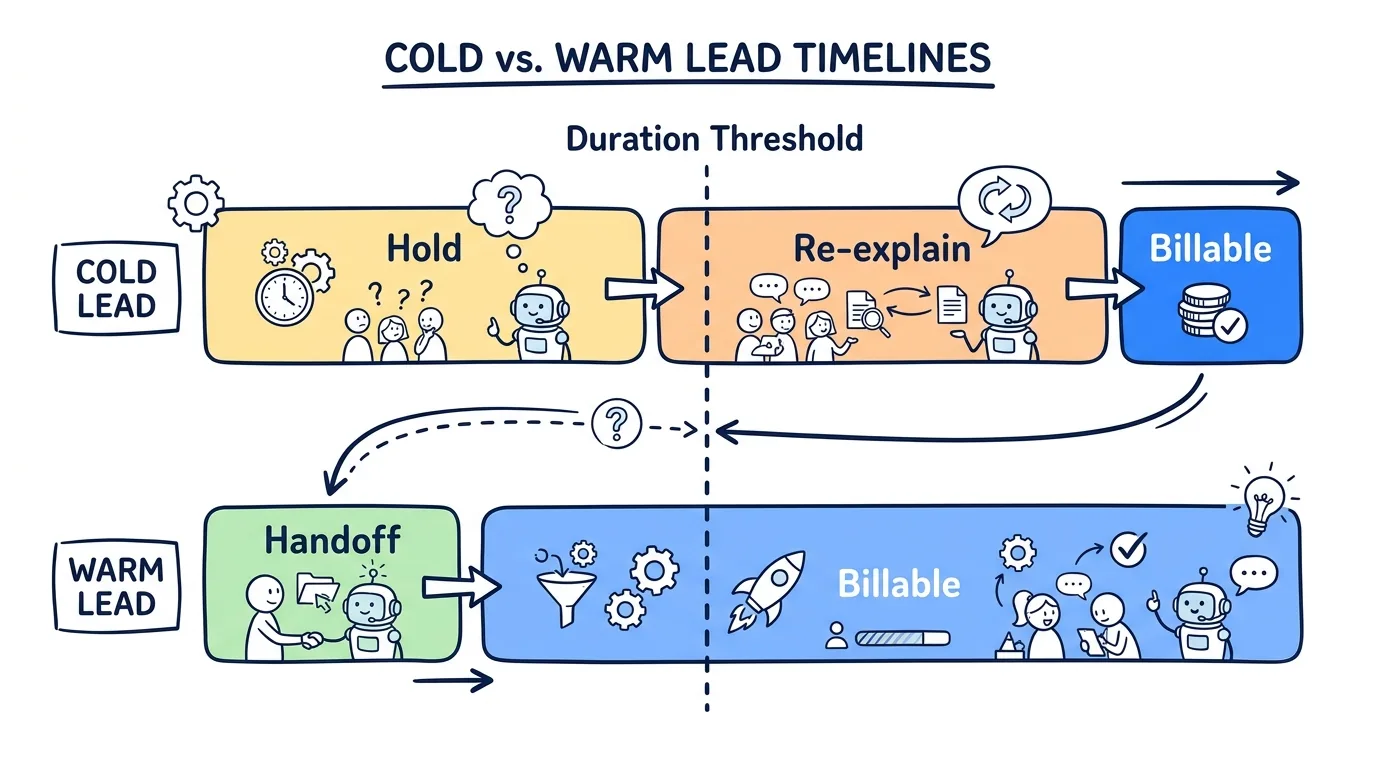
The conversion side compounds the effect. Because the buyer receives a qualified, context-rich caller instead of a cold dial, warm-transferred live transfer leads close at far higher rates and earn premium payouts. That is why serious pay-per-call operations treat the warm transfer as the default delivery mechanism and reserve cold transfers for internal, non-billable routing only.
How to Automate Warm Transfers at Scale
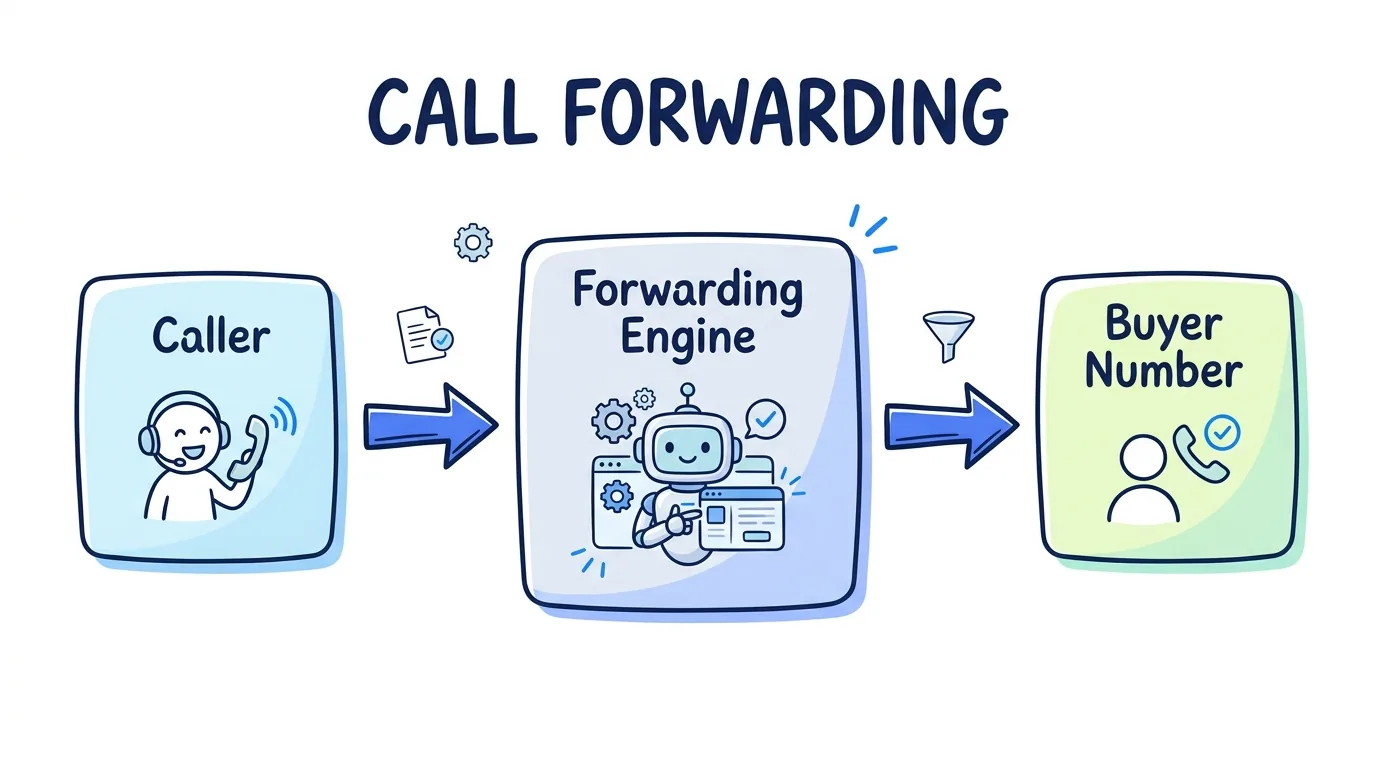
Manual warm transfers work, but they do not scale past a busy intake floor. The fix is a routing layer that performs the warm handoff automatically: it attaches qualification data to the call, applies your distribution rules, and connects the right buyer in seconds so the context a human would deliver verbally travels as structured data instead.
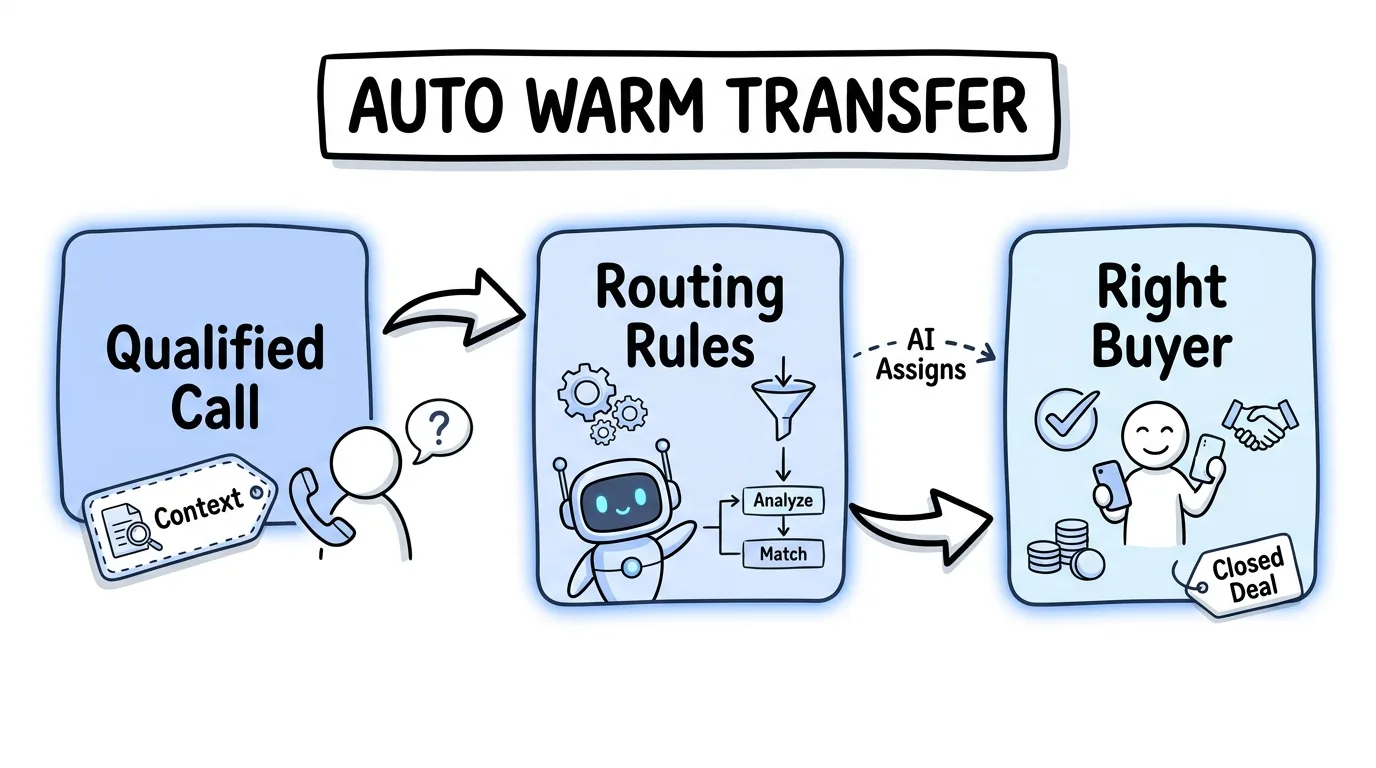
Lead Distro AI powers this layer for pay-per-call and pay-per-lead agencies. It supports all four distribution methods, Round Robin, Weighted, Priority/Waterfall, and Ping-Post, so calls and web leads route the same way under one set of rules, and it attaches full caller context to every transfer. You can see how Lead Distro AI routing works or route calls and leads in real time with Lead Distro AI on a 7-day free trial (a credit card is required, and you can cancel anytime before it ends). Call tracking is usage-based, a per-number monthly fee plus a per-minute rate on top of the flat platform subscription, so you only pay for the call minutes you actually route.
FAQ
What is the difference between a warm transfer and a cold transfer?
The difference is context. In a warm transfer, the first agent stays on the line, introduces the caller, and passes along what has already been discussed before handing off. In a cold transfer, the agent routes the call and disconnects immediately, so the caller reaches a stranger and starts over. Warm transfers protect the caller experience and raise conversion; cold transfers prioritize speed for low-stakes routing.
Is a cold transfer the same as a blind transfer?
Yes. Cold transfer and blind transfer describe the same behavior: the first agent sends the call to another party and drops off without an introduction or any context. Phone systems and call routing tools usually label this option "blind transfer," while the customer-service world calls it a cold transfer. The warm equivalent is often labeled "attended transfer" in the same settings, because the agent attends to the handoff before leaving.
When should you use a cold transfer instead of a warm transfer?
Use a cold transfer for simple, high-volume, low-stakes routing, such as redirecting a wrong-extension caller, pointing someone to a billing line, or sending a caller to a self-service menu. In those cases a warm introduction adds no value. Use a warm transfer whenever the caller has intent, an account, an unresolved issue, or revenue attached, because the context you preserve directly affects resolution and conversion.
Why does warm transfer vs cold transfer matter for pay-per-call?
Pay-per-call buyers pay for calls that clear a billable duration threshold. A cold transfer burns that time on hold and re-explanation, raising abandon rates before the call qualifies. A warm transfer delivers a pre-briefed caller, so the connected call sustains itself, clears the threshold, and closes at a higher rate. That is why warm-transferred leads earn premium payouts and are the default delivery method in pay-per-call.
Can warm and cold transfers be automated?
Yes. Modern lead distribution and call routing platforms automate both. For warm transfers, the platform attaches qualification data to the call and connects the right buyer or department in seconds, so the receiving party opens the conversation already briefed without a manual introduction. Cold transfers are automated as simple rule-based routing. The advantage of automation is consistency: every high-value call gets the warm handoff, and only routine redirects fall back to cold.
Conclusion
Warm transfer vs cold transfer is really a decision about context and stakes. A warm transfer keeps the caller and their history together, which protects satisfaction, first-contact resolution, and, in pay-per-call, the billable duration and buyer conversion that pay the bills. A cold transfer trades that context for speed, which is the right call only for simple, low-value redirects. Match the transfer type to the stakes and you stop leaking conversions on the calls that matter most.
The next step is the routing infrastructure that makes the warm handoff automatic and reliable at volume. Explore the warm transfer pillar guide for the full mechanic, then see how Lead Distro AI connects qualified callers to the right buyer in seconds.
Ready to deliver warm transfers your buyers actually convert? Start your free trial and set up automated call routing, ring tree distribution, and real-time tracking in minutes. Lead Distro AI attaches full caller context to every transfer so buyers pick up already knowing who is on the line.
About the Author
Founder & CEO of Lead Distro AI & Great Marketing AI
UC Berkeley graduate and former software engineer at Microsoft. Rafael built Lead Distro AI after managing over $10M in ad spend for performance marketing agencies (pay-per-lead and pay-per-call), including running campaigns for Neil Patel. He combines deep software engineering expertise with hands-on performance marketing experience to build tools that help these agencies scale profitably.
About Lead Distro AI
Lead Distro AI: AI-Powered Lead Distribution & Call Tracking That Maximizes ROI
The modern platform for pay-per-lead and pay-per-call agencies. Route, score, and deliver leads with AI-powered automation and real-time P&L tracking. Built for performance marketing agencies and lead buyers across legal, insurance, mortgage, solar, and home services verticals.
4 Distribution Methods
Waterfall, Round Robin, Weighted, Ping-Post
Ping-Post Auctions
Real-time bidding with sub-second routing
Real-Time P&L Reporting
Track revenue, costs, and profit per campaign
Call Tracking
Assign tracking numbers, record calls, and attribute conversions
Lead Scoring
Score every lead before routing to maximize conversion
Partner Portal
Self-serve dashboard for buyers to track leads