Call Transfer Scripts: Word-for-Word Warm Transfer Templates
Copy-paste call transfer script templates for pay-per-call agents: word-for-word warm transfer intro, permission, hold, hand-off, callback, and disclosure lines.

Rafael Hernandez
Founder & CEO
Ex-Microsoft SWE · $10M+ PPL ad spend
I hope you enjoy reading this blog post. If you want to try Lead Distro AI for free, click here.
Author: Rafael Hernandez | Founder & CEO of Lead Distro AI
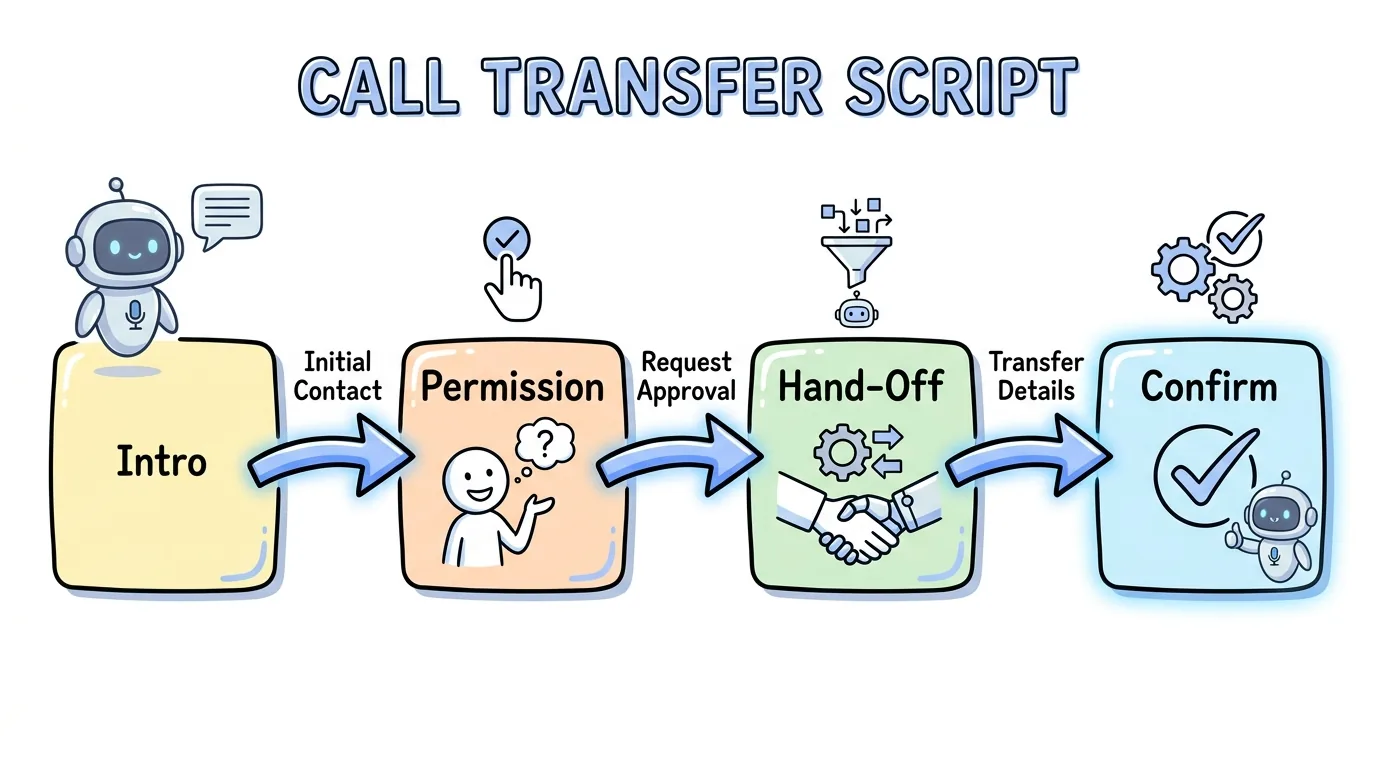
A call transfer script is the word-for-word language an agent uses to move a caller from one person or department to another without making the caller repeat themselves. For a warm transfer, a complete script has four parts: the intro that greets the caller and confirms why they called, the permission line that asks to connect them, the hand-off where you brief the receiving agent while the caller holds, and the confirmation that hands the caller back with reassurance. Below are copy-paste templates for each, written for pay-per-call and pay-per-lead agents who deliver live-transfer calls to buyers.
The reason a scripted transfer matters is conversion. A warm handoff only protects lead quality if every agent delivers the same clean introduction every time. According to Invoca, most businesses rate inbound phone calls as their highest-quality lead source, and a sloppy transfer throws that quality away at the finish line. A tested call transfer script removes the guesswork: agents stop improvising, buyers pick up briefed callers, and your billable, connected calls go up. Use the scripts here as-is, or adapt the bracketed fields to your vertical.
Key Takeaways
- A complete
call transfer scripthas four blocks: intro, permission-to-transfer, hand-off brief, and confirmation. Each block has a job, and skipping one is where transfers break down. - The
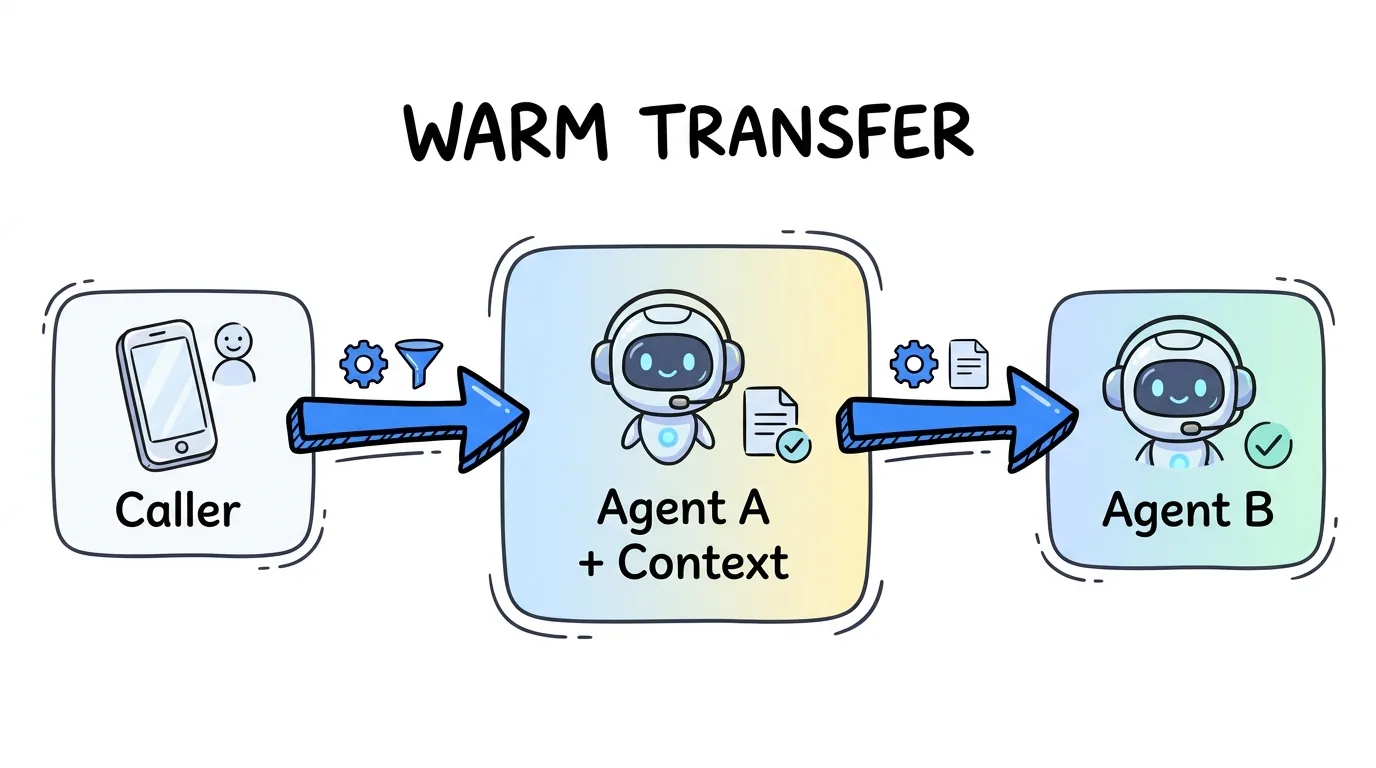
warm transfer scriptkeeps the caller on the line while you brief the receiving agent, so the buyer inherits context instead of answering a stranger. - A permission line ("I'm going to connect you now, is that alright?") lifts completion rates by setting the caller's expectation before the hold.
- Every outbound program needs a disclosure line and TCPA-aware consent language baked into the script, not left to the agent to remember.
- The strongest
warm transfer call centerscripts pass structured context, name, reason, and qualification, so the hand-off is fast and repeatable under volume.
What a Call Transfer Script Includes
A call transfer script is not one paragraph. It is a short sequence of spoken lines, each triggered at a specific moment in the call. Treating it as a checklist keeps agents consistent when call volume spikes.
Every transfer script should cover five things:
- The intro: greet, confirm identity, and restate the reason for the call in one sentence.
- The permission: tell the caller you are connecting them and get a quick verbal yes.
- The hold: explain the brief wait and reassure them it is intentional.
- The hand-off brief: privately summarize the caller for the receiving agent (name, reason, qualification).
- The confirmation: bring the caller back, restate they are in good hands, and drop off.
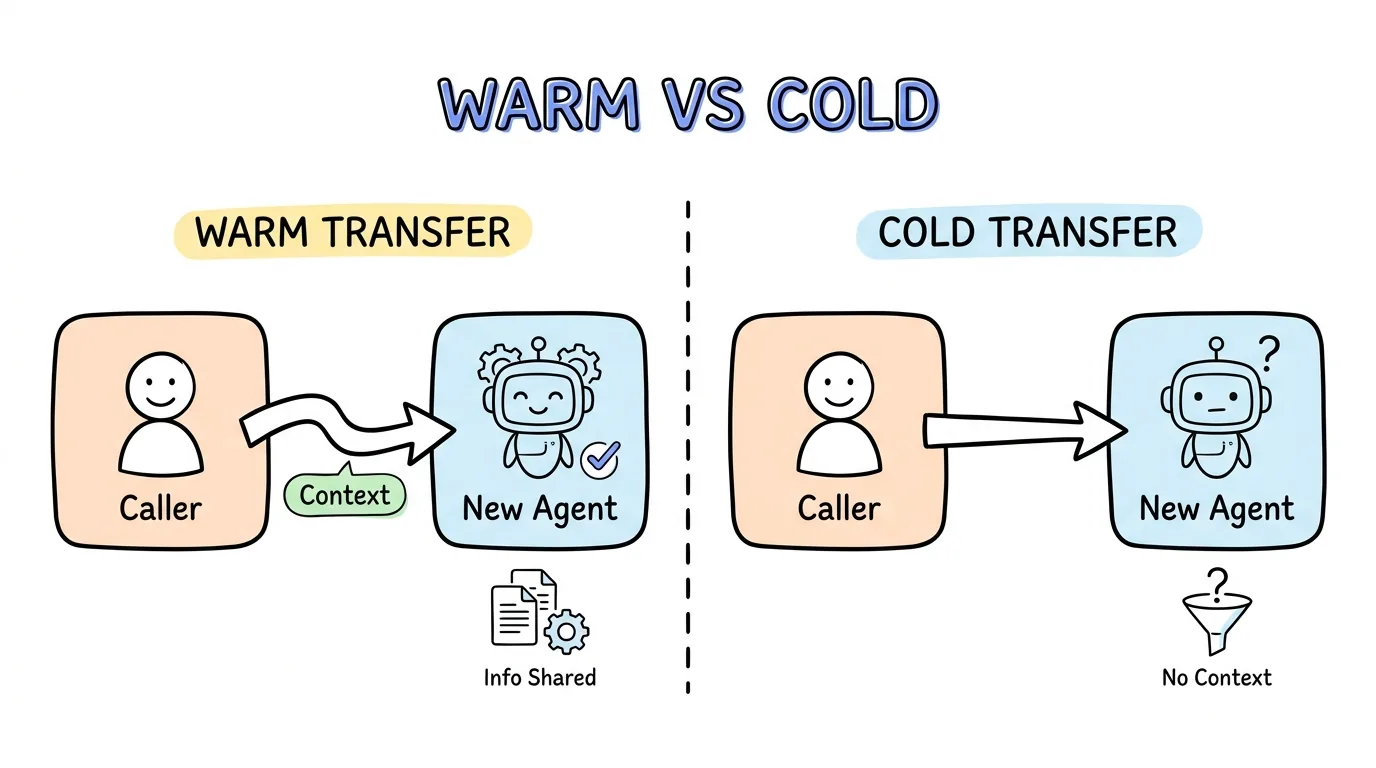
This is the same sequence covered in our guide on what a warm transfer is, turned into language your agents can read aloud. If you are still deciding whether to brief the buyer at all, our breakdown of warm transfer vs cold transfer explains when each approach fits.
The Warm Transfer Intro Script
The intro sets the tone. It confirms you are talking to the right person and names the reason for the call in one line, so nothing is ambiguous before the transfer starts. Keep it short and confident.
Agent: "Thanks for calling, this is [Agent Name]. Am I speaking with [Caller Name]? Great. I understand you were in a car accident and you're looking to speak with an attorney, is that right?"
Caller: "Yes, that's right."
Agent: "Perfect. I have the right specialist for exactly this, and they can help you today."
Notice the intro does two jobs at once: it verifies the caller and it pre-frames the receiving agent as the right person. That framing is what makes the caller comfortable holding for a moment. In a warm transfer call center environment, standardizing this opener is the single fastest way to raise transfer completion, because it removes the awkward "let me see who can help" hesitation that makes callers hang up.
The Permission-to-Transfer Script
Asking permission is a small line that changes the caller's psychology. Instead of feeling dumped, they feel guided. It also gives you a verbal yes on record before the hold.
Agent: "I'm going to connect you with [Buyer or Department Name] who handles this directly. I'll stay on for a second to introduce you so you don't have to repeat anything. Is that alright?"
Caller: "Sure."
Agent: "Great, give me just one moment while I get them on the line. Please stay right there."
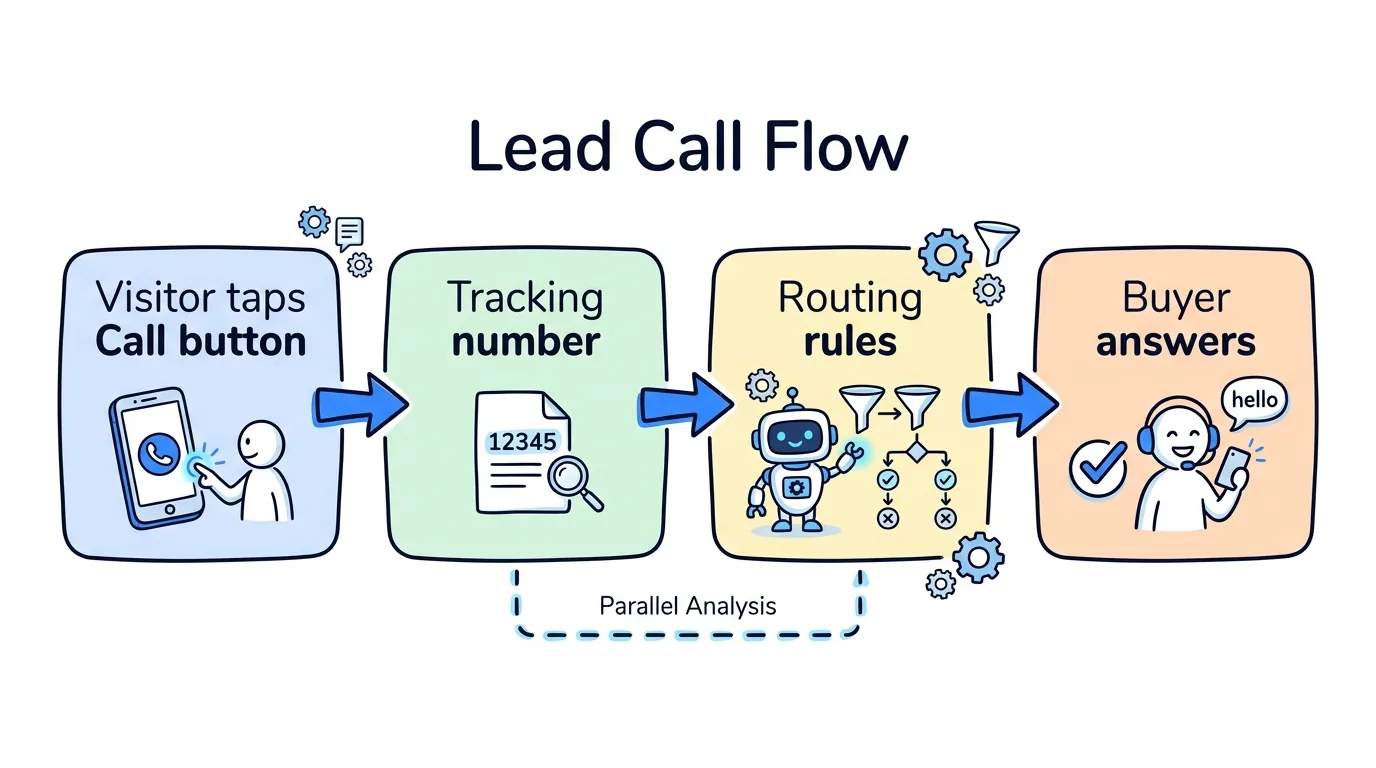
That last sentence is your hold line, and it matters more than agents expect. Silence with no explanation is where callers drop. Tell them the wait is short and intentional. For inbound programs that route the live call to a buyer's number, the mechanics behind this hold are handled by call forwarding software, which places the caller on hold while it dials and connects the receiving party.
The Hand-Off Script
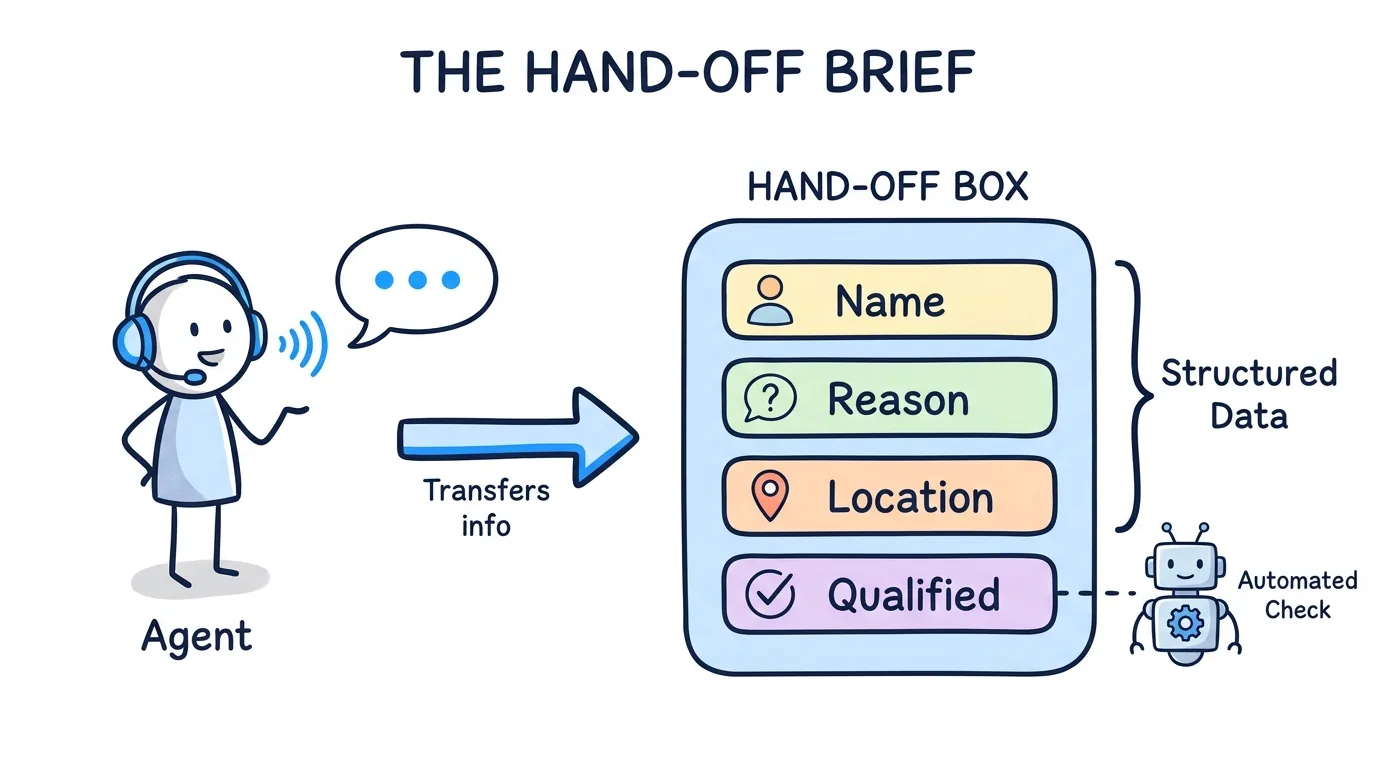
The hand-off is the heart of the warm transfer. While the caller holds, you brief the receiving agent privately. Deliver the same four data points every time so the buyer opens the conversation already knowing who is on the line.
Agent (to buyer): "Hi [Buyer Name], I have a live caller for you. This is [Caller Name] from [City, State]. They were in a rear-end collision three days ago, no attorney yet, and they meet your intake criteria. Ready for me to bring them in?"
Buyer: "Yes, connect them."
Agent (bringing the caller back): "[Caller Name], thanks for holding. I have [Buyer Name] on the line now, they specialize in exactly your situation and will take great care of you. You're in good hands, I'll let you two talk."
The structure of the brief, name, reason, location, qualification, is what makes the transfer fast and repeatable. When your routing platform attaches that data to the call automatically, the receiving buyer sees it on screen even before you speak, which is the model behind live transfer leads as a product.
The Callback and Voicemail Script
Not every transfer connects on the first try. When the buyer is unavailable or the line drops, a callback script keeps the lead warm instead of losing it. Never leave the caller wondering what happened.
Agent (buyer unavailable): "[Caller Name], the specialist is with another client for just a moment. I can either hold them a bit longer, or have them call you right back at this number in the next few minutes, whichever you prefer."
Voicemail (if you must leave one): "Hi [Caller Name], this is [Agent Name] following up on your call about [reason]. I'm connecting you with [Buyer Name] who can help directly. I'll try you again shortly, or you can reach us back at [number]. Talk soon."
Speed is the reason this script exists. A Harvard Business Review study of online sales leads, The Short Life of Online Sales Leads, found that firms which reached prospects within an hour were far more likely to have a meaningful conversation than those that waited. A warm transfer compresses that response time to near zero, and a fast callback protects it when the first connection misses.
Objection and Compliance Lines
Two script blocks are non-negotiable for regulated verticals: objection handling and disclosure. Bake both into the call transfer script so no agent has to improvise legal language.
For a hesitant caller:
Agent: "I completely understand. To be clear, there's no cost to speak with them, and it's your decision entirely. I just want to make sure you get answers from the right person today rather than starting over later. Shall I connect you?"
For disclosure and consent, add a recording notice and, for outbound, a consent line reviewed by your own counsel:
Agent: "Before I connect you, please note this call may be recorded for quality and training purposes."
Recording and consent rules vary by state and by campaign, and TCPA obligations apply to many outbound calls, so treat these lines as a starting template and confirm the exact wording with your compliance team. The point of scripting them is consistency: a disclosure that only some agents remember is a disclosure you cannot rely on.
Building the Script Into Your Routing Platform
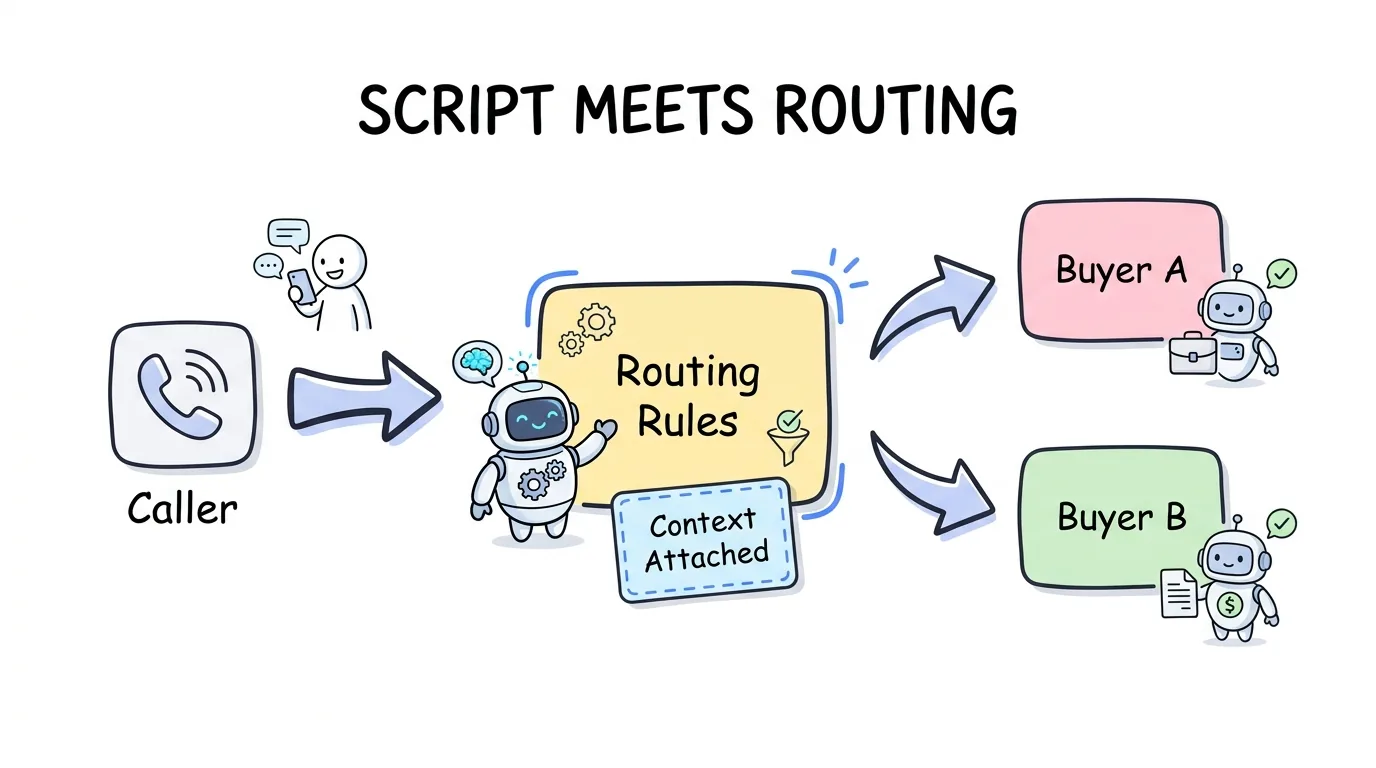
A script is only half the system. The other half is the routing layer that decides which buyer receives the transfer and attaches the caller's context to it. Without that, agents read the perfect warm transfer script and still fumble the hand-off because the right buyer is not on the line.
This is where a distribution platform earns its keep. Lead Distro AI attaches qualification data to each call, applies your distribution rules, and connects the qualified caller to the correct buyer in seconds, so the spoken script and the routing move together. You can see how Lead Distro AI routes and bills calls on the call routing product tour, or start your free Lead Distro AI trial and wire your transfer scripts into automated ring-tree distribution. When the platform passes name, reason, and qualification automatically, your hand-off script gets shorter and your connect rate goes up.
FAQ
What is a call transfer script?
A call transfer script is the word-for-word language an agent uses to move a caller to another agent or department. For a warm transfer, it has four blocks: an intro that confirms the caller and reason, a permission line that asks to connect them, a hand-off where the agent briefs the receiving party while the caller holds, and a confirmation that hands the caller back. Scripting each block keeps transfers consistent across every agent and every call.
What should a warm transfer script include?
A complete warm transfer script should include the intro, the permission-to-transfer line, a short explained hold, the private hand-off brief, and the confirmation. The hand-off brief is the most important part: it passes the caller's name, reason for calling, location, and qualification status to the receiving agent in one sentence, so the buyer opens the conversation already knowing who is on the line instead of starting from zero.
How do you script a hand-off in a call center?
In a warm transfer call center, the hand-off is scripted as a fixed four-point brief delivered while the caller holds: name, reason, location, and whether the caller meets the buyer's criteria. Agents keep it to one or two sentences, confirm the receiving agent is ready, then bring the caller back with a reassurance line. Standardizing this format is what keeps transfers fast and complete when call volume is high.
What disclosure line should a transfer script use?
Most transfer scripts include a recording notice such as "this call may be recorded for quality and training purposes," delivered before connecting the caller. For outbound programs, additional TCPA consent language often applies. Because recording and consent rules vary by state and campaign, treat any disclosure line as a template and confirm the exact wording with your own compliance or legal team before using it live.
Do call transfer scripts improve conversion?
Yes, because they remove the variability that kills warm transfers. When every agent delivers the same clean intro, permission, and hand-off, buyers receive briefed callers instead of confused strangers, and fewer callers drop during the hold. Inbound phone calls already convert at high rates, so protecting that quality through the final hand-off with a consistent call transfer script directly protects your connect and payout rates.
Conclusion
A call transfer script turns a warm transfer from an improvised favor into a repeatable discipline. Give every agent the same four blocks, intro, permission, hand-off, and confirmation, plus a disclosure line for regulated calls, and your transfers stay clean no matter who is on shift. The scripts above are ready to copy, adapt to your vertical, and roll out to your floor today.
The final piece is infrastructure. A script delivers its full value only when the routing layer puts the right buyer on the line and passes context automatically. Explore the call routing product tour to see how Lead Distro AI powers scripted warm transfers for pay-per-call agencies, and read our pillar on what a warm transfer is for the mechanics behind every script here.
Ready to put these transfer scripts into production? Start your free trial and connect your scripts to automated call routing, ring-tree distribution, and real-time tracking. Lead Distro AI attaches full caller context to every transfer so buyers pick up already briefed.
About the Author
Founder & CEO of Lead Distro AI & Great Marketing AI
UC Berkeley graduate and former software engineer at Microsoft. Rafael built Lead Distro AI after managing over $10M in ad spend for performance marketing agencies (pay-per-lead and pay-per-call), including running campaigns for Neil Patel. He combines deep software engineering expertise with hands-on performance marketing experience to build tools that help these agencies scale profitably.
About Lead Distro AI
Lead Distro AI: AI-Powered Lead Distribution & Call Tracking That Maximizes ROI
The modern platform for pay-per-lead and pay-per-call agencies. Route, score, and deliver leads with AI-powered automation and real-time P&L tracking. Built for performance marketing agencies and lead buyers across legal, insurance, mortgage, solar, and home services verticals.
4 Distribution Methods
Waterfall, Round Robin, Weighted, Ping-Post
Ping-Post Auctions
Real-time bidding with sub-second routing
Real-Time P&L Reporting
Track revenue, costs, and profit per campaign
Call Tracking
Assign tracking numbers, record calls, and attribute conversions
Lead Scoring
Score every lead before routing to maximize conversion
Partner Portal
Self-serve dashboard for buyers to track leads