Dynamic Lead Routing: Route Every Lead by Real-Time Rules
Dynamic lead routing sends each lead to the right buyer in real time using filters, caps, priority, and live bidding. Here is how the decision engine works.

Rafael Hernandez
Founder & CEO
Ex-Microsoft SWE · $10M+ PPL ad spend
I hope you enjoy reading this blog post. If you want to try Lead Distro AI for free, click here.
Author: Rafael Hernandez | Founder & CEO of Lead Distro AI
Last Updated: July 8, 2026
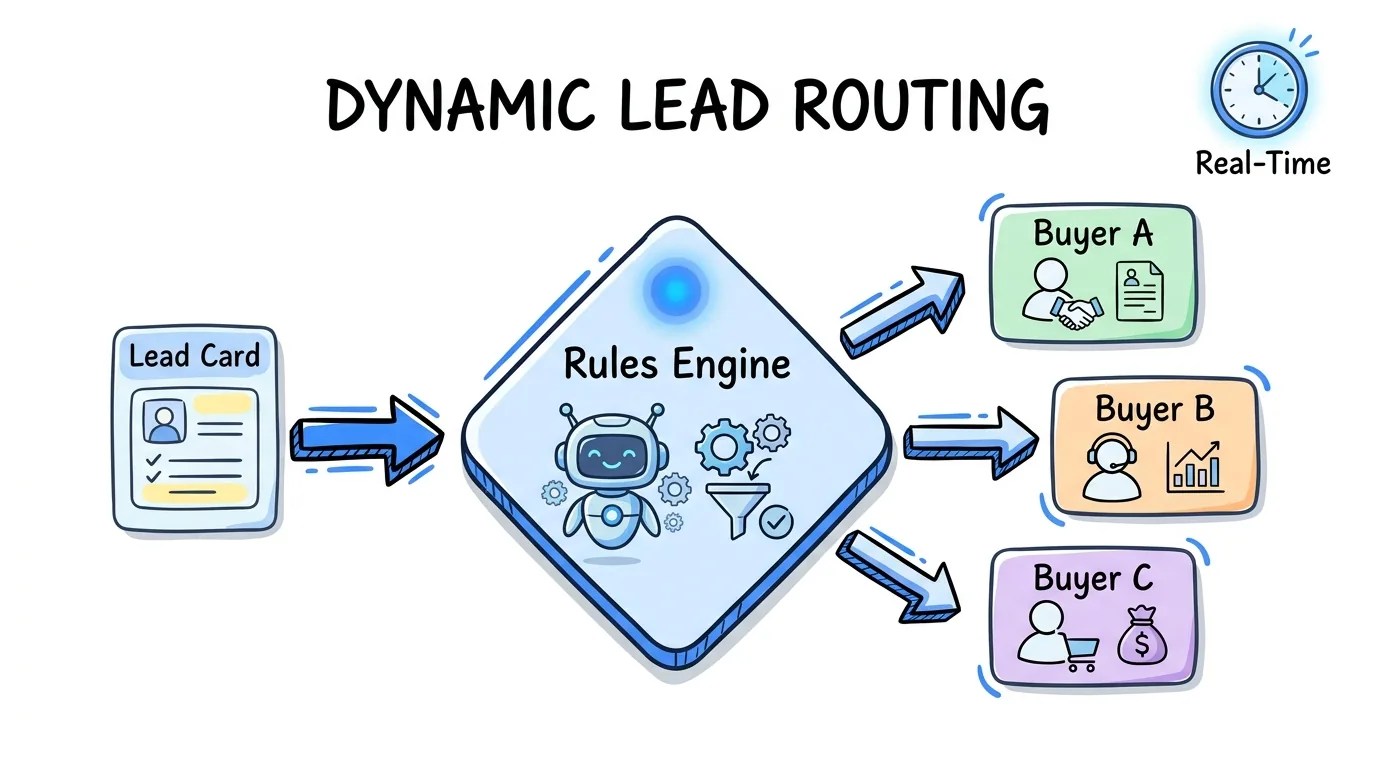
Dynamic lead routing is the real-time assignment of every inbound lead to the best-matched buyer using rules that are evaluated at the moment the lead arrives, not on a fixed schedule or a static list. Instead of hard-coding one destination per source, a dynamic engine checks a live stack of conditions for each lead: which buyers cover its state or ZIP, who still has room under their daily cap, who sits highest in the priority order, and who is bidding the most for it right now. The lead lands with the winner in well under a second.
Speed is the whole point. The original Harvard Business Review study of roughly 1.25 million leads found that contacting a lead within five minutes made it 21 times more likely to qualify than waiting 30 minutes, yet a Workato benchmark of 114 B2B companies found 99 percent still fail the five-minute test. Dynamic lead routing closes that gap by making the routing decision itself instant and rule-driven. This guide breaks down each building block and how they combine at decision time.
Key Takeaways
- Dynamic lead routing decides in real time, not on a schedule. Every rule is evaluated the instant a lead arrives, so the destination can change lead by lead.
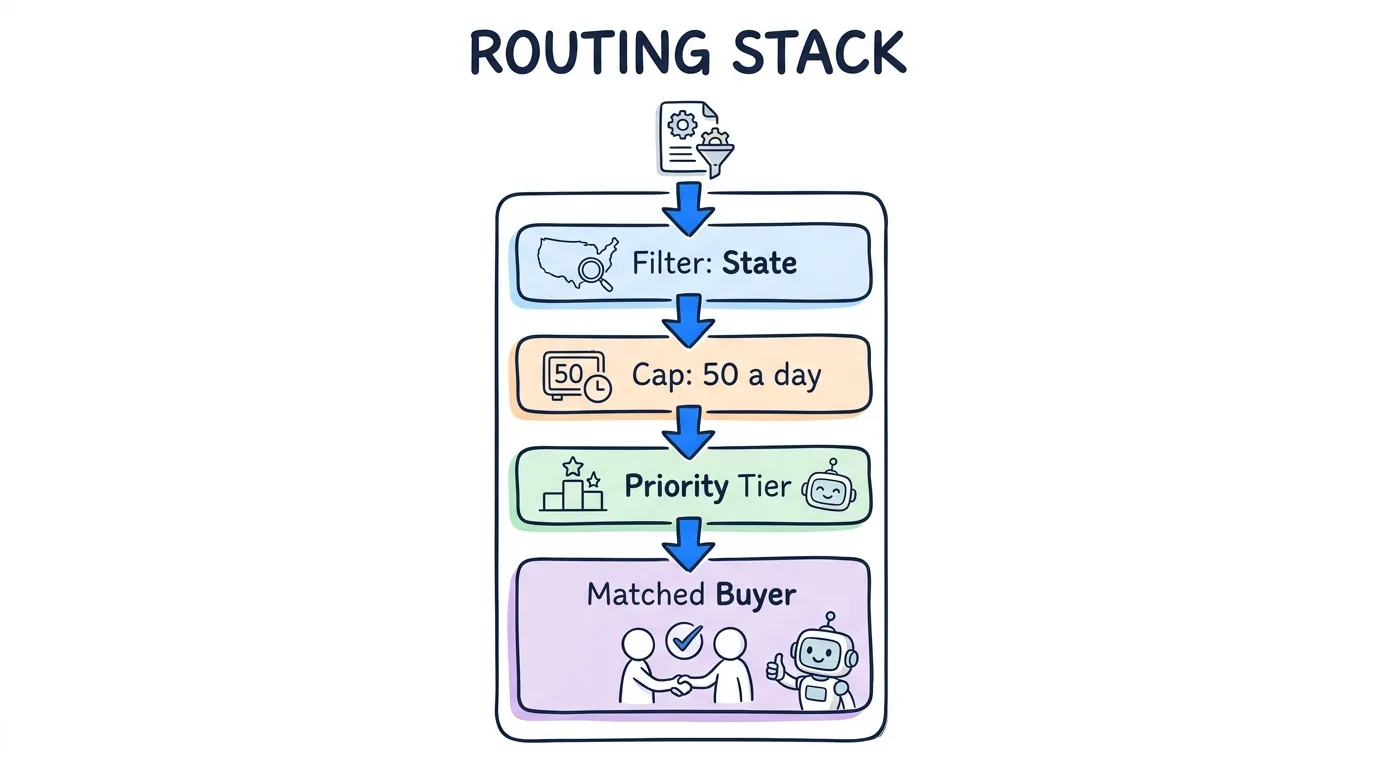
- Four building blocks stack at decision time: buyer criteria (filters), caps, priority or waterfall order, and real-time bidding. Each one narrows the field before the next runs.
- Filters match leads to buyers by fit. Coverage by state, ZIP, or county, distance from a center ZIP, and validation checks decide who is even eligible for a given lead.
- Caps protect pacing. Daily and volume caps stop a buyer from over-receiving, and a lead that hits a cap falls through to the next eligible destination.
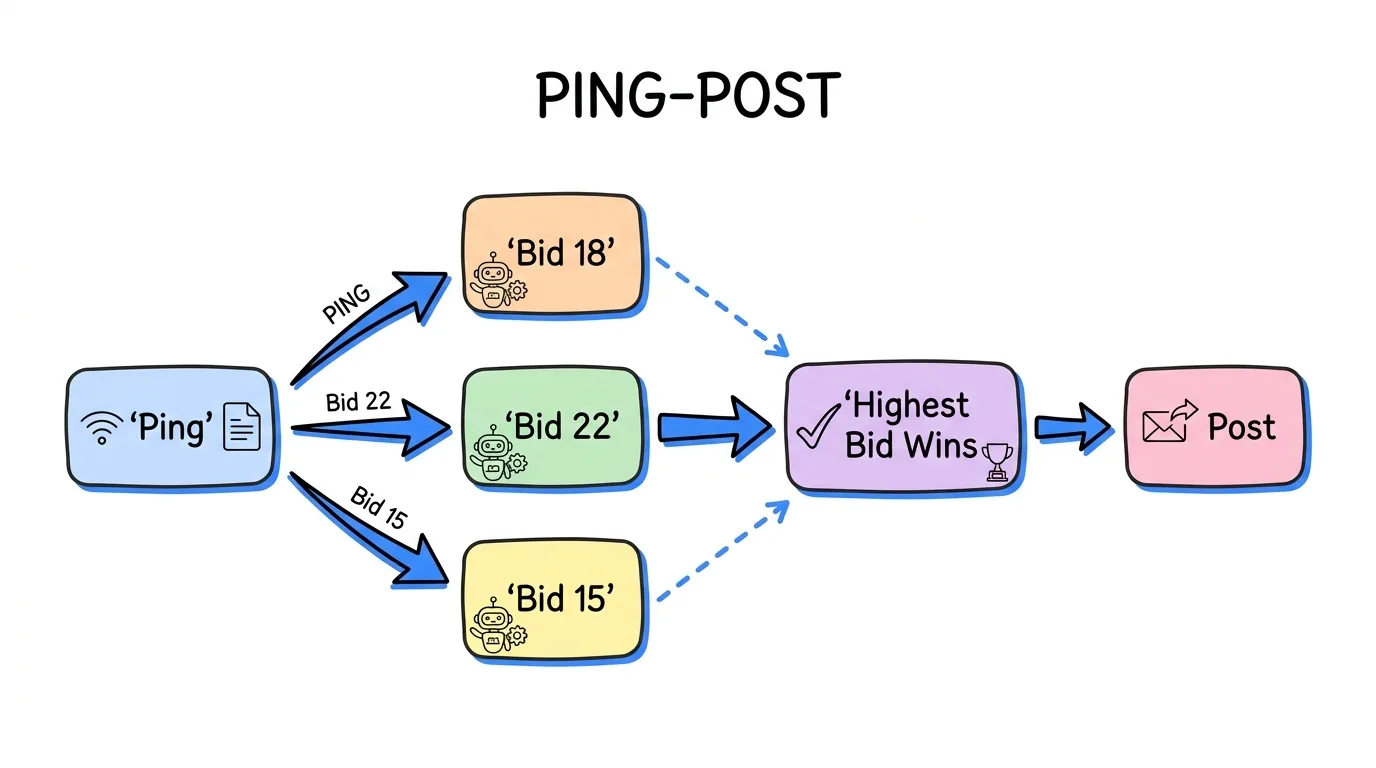
- Real-time bidding sets the price. In a ping-post auction, buyers bid within milliseconds and the highest eligible bid wins the lead.
- A routing trail shows every skipped destination and why, so you can see exactly why each lead went where it did.
What Dynamic Lead Routing Actually Means
Static routing sends every lead from a source to one fixed buyer. Dynamic lead routing replaces that with a decision made fresh for each lead. The router reads the lead's attributes, compares them against a live rule set, and picks the destination that best fits at that exact moment.
The difference matters most at volume. A single lead routing rule set can serve dozens of buyers with different coverage areas, quality thresholds, pacing limits, and prices without anyone touching a config file per lead. When a buyer pauses, hits a cap, or raises a bid, the next lead simply routes differently.
Real time lead routing also protects revenue. A lead that would have been wasted on a full or out-of-area buyer under static rules instead flows to the next best match. That is the practical value of dynamic lead routing: fewer dead ends, faster delivery, and a price set by demand rather than a spreadsheet.
The Building Blocks of a Routing Decision
Every dynamic lead routing decision runs the same sequence of checks. Each stage removes destinations that do not fit before handing the survivors to the next stage.
Buyer criteria and filters
Filters answer one question: which buyers are even eligible for this lead? In Lead Distro AI, each destination carries a Coverage section for the states, ZIP codes, and counties it buys in, so geography is a rule rather than a note in the buyer's name. You can route a lead to a buyer only when it is within a set distance of a ZIP, such as within 25 miles of 90210, which powers precise geographic lead routing without manual lists. Validation rules layer on top: a buyer can require a valid TrustedForm certificate, and leads with bad certificates are held back before they ever reach a destination that would reject them. Filters run first because there is no reason to price or rank a lead against a buyer who cannot legally or contractually accept it.
Caps and pacing
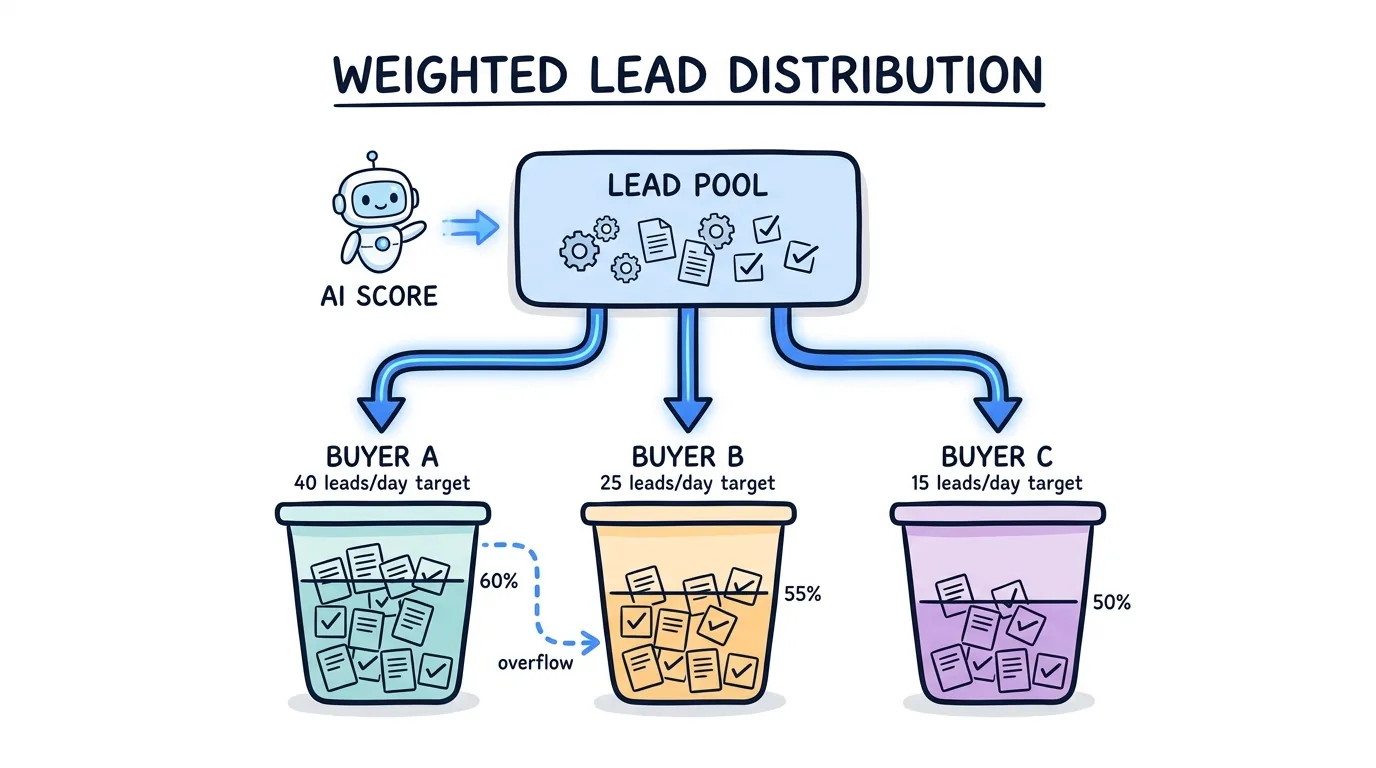
Caps keep any one buyer from swallowing more volume than they agreed to. A buyer's accepted count tracks leads since your last cap reset, and once a cap is reached that destination stops receiving until the cap resets. Caps are what make lead routing rules pace-aware instead of first-come-first-served.
The important behavior is the fall-through. When a lead hits a full buyer, dynamic lead routing does not drop it; it moves to the next eligible destination in the order. That keeps delivery moving even when your top buyer is maxed out for the day, so you monetize the lead instead of losing it.
Priority and waterfall order
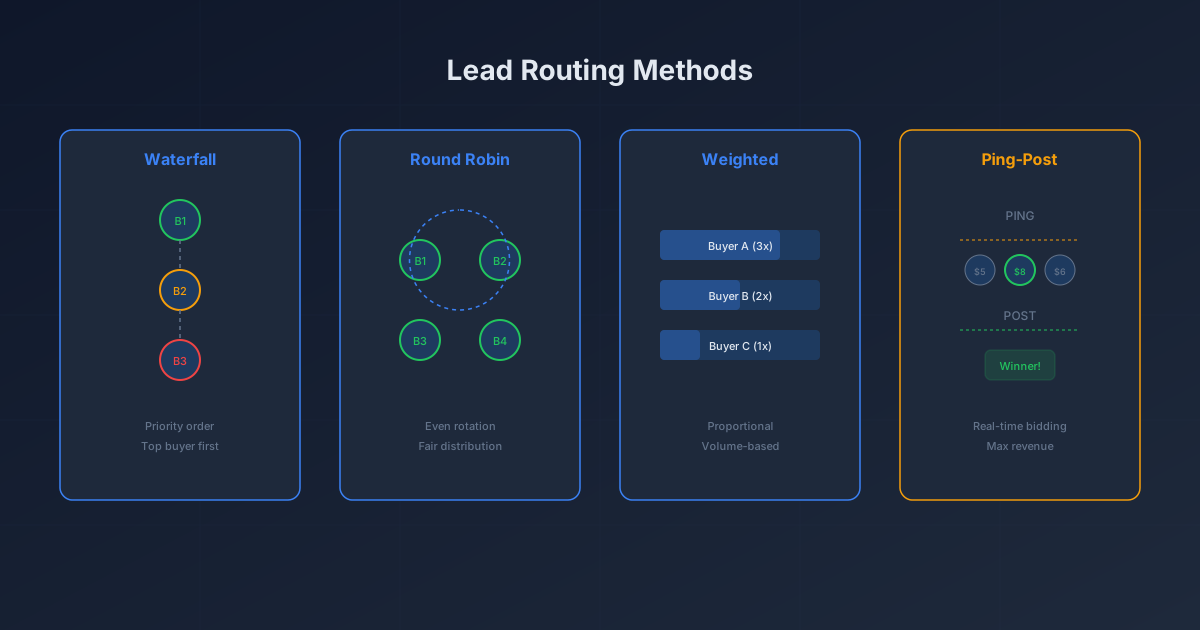
Once filters and caps decide who is eligible, priority sets who gets the lead first. Lead Distro AI supports Priority and Weighted routing, so you rank your buyers and can split volume between same-tier buyers by weight, editing each weight right in the routing table. Priority routing and waterfall routing are the same idea: the lead offers to your first-choice buyer, and only rolls down to the next when the current one declines, is full, or is paused. For teams that want even distribution instead of a ranked list, round robin lead distribution splits leads evenly between targets in turn with no weights to set.
Real-Time Bidding: Where Price Enters the Decision
Filters, caps, and priority decide who is eligible. Real-time bidding decides what the lead is worth. In a ping-post model, the platform sends a preview of the lead (a ping) to eligible buyers, each buyer's system replies with a bid within milliseconds, and the full lead is posted to the winner. This is the price-setting layer of dynamic lead routing, and ping-post lead distribution is how most agencies run it.
Lead Distro AI tracks this auction directly: a Ping Post campaign reports Pings, Pings Rejected, Posts, and Post percentage, so you can see how many pings actually turn into sold leads. Because the price floats with demand, real-time lead bidding typically earns more per lead than fixed-price distribution, and it does it inside the same sub-second decision as the rest of your rules.
Dynamic Routing for Calls
The same real-time logic extends to phone leads. When a call campaign uses dynamic routing, each call can be handed to an outside bidder such as Retreaver or Ringba, and the call forwards to the number that bidder returns. Two floors keep the auction safe: a minimum bid means a call never routes to a bidder below your floor (bids under it are skipped and the call falls to your next target), and a maximum bid catches a mis-mapped bid field before it overcharges a destination. Campaign operating hours apply to these dynamic routing targets too, so when a campaign is closed, outside bidders are not pinged and cannot win calls. Every dynamic routing ping is saved with its full request and response, which gives you exact evidence if a buyer later disputes a call.
Static vs Dynamic Lead Routing
The table below shows why agencies move from static rules to a dynamic engine as they add buyers.
| Factor | Static routing | Dynamic lead routing |
|---|---|---|
| Decision timing | Fixed per source | Evaluated live per lead |
| Buyer matching | One destination hard-coded | Filters by coverage, distance, validation |
| Pacing | Manual | Caps with automatic fall-through |
| Ordering | Single buyer | Priority, weighted, or round robin |
| Pricing | Fixed | Real-time ping-post bidding |
| Visibility | Delivery success or failure | Routing trail of every skipped destination |
A static setup is fine with one or two buyers. Once you run many buyers with overlapping coverage and different budgets, dynamic lead routing is what keeps every lead matched, paced, and priced without manual intervention. You can see how Lead Distro AI routes and bills leads end to end in the product tour.
Why Real-Time Rules Beat Manual Assignment
Manual assignment breaks at scale for a simple reason: humans cannot evaluate coverage, caps, priority, and price for every lead in under a second. The market has already priced that gap. Spherical Insights values the global lead-to-account matching and routing software market at $2.3 billion in 2024, projected to reach $6.3 billion by 2035 at a 9.59 percent CAGR.
Dynamic lead routing also creates an audit trail that manual routing never can. Lead Distro AI's routing trail shows every destination a lead or call skipped before connecting and exactly why, whether a cap was hit, it was outside hours, or it was paused. That visibility turns routing from a black box into something you can tune. When a test lead is not accepted, the platform shows precisely what to check, like buyer status, filters, and caps, so you fix routing in minutes instead of guessing.
Frequently Asked Questions
What is dynamic lead routing?
Dynamic lead routing is the real-time assignment of each inbound lead to the best-matched buyer based on rules evaluated the moment the lead arrives. It stacks filters (buyer coverage and validation), caps (pacing limits), priority or waterfall order, and real-time bidding, then delivers the lead to the winner in under a second. The destination can change from one lead to the next.
How is dynamic lead routing different from static routing?
Static routing sends every lead from a source to one fixed destination. Dynamic lead routing decides fresh for each lead, so if the top buyer is full, out of area, or paused, the lead automatically flows to the next eligible buyer. That fall-through behavior is what prevents wasted leads and keeps delivery moving at high volume.
What are lead routing rules made of?
Lead routing rules combine four things: buyer criteria (which states, ZIPs, or counties a buyer covers, plus validation like a required TrustedForm certificate), caps that limit how many leads a buyer receives, a priority or weighted order that ranks buyers, and optional real-time bidding. Each rule narrows the field before the next one runs.
Does dynamic lead routing include real-time bidding?
Yes. Real-time bidding is the pricing layer. In a ping-post auction, eligible buyers receive a preview of the lead and submit bids within milliseconds, and the highest eligible bid wins the full lead. Lead Distro AI reports pings, pings rejected, posts, and post percentage so you can measure how the auction performs.
Can I see why a lead went to a specific buyer?
Yes. Lead Distro AI keeps a routing trail that shows every destination a lead or call skipped before connecting and the reason for each skip, such as a cap being hit, being outside hours, or being paused. For phone dynamic routing, every ping is saved with its full request and response for dispute evidence.
Conclusion
Dynamic lead routing turns a pile of buyers with different coverage, budgets, and pacing into a single real-time decision that runs on every lead. Filters decide who is eligible, caps protect pacing, priority sets the order, and real-time bidding sets the price, all in under a second and all with a routing trail you can audit. As you add buyers, that is the difference between leads that convert and leads that die in a queue.
If you want real time lead routing without building the engine yourself, start your 7-day Lead Distro AI trial and route your first leads by rules today. A week is enough to see your own routing trail in action.
About the Author
Founder & CEO of Lead Distro AI & Great Marketing AI
UC Berkeley graduate and former software engineer at Microsoft. Rafael built Lead Distro AI after managing over $10M in ad spend for performance marketing agencies (pay-per-lead and pay-per-call), including running campaigns for Neil Patel. He combines deep software engineering expertise with hands-on performance marketing experience to build tools that help these agencies scale profitably.
About Lead Distro AI
Lead Distro AI: AI-Powered Lead Distribution & Call Tracking That Maximizes ROI
The modern platform for pay-per-lead and pay-per-call agencies. Route, score, and deliver leads with AI-powered automation and real-time P&L tracking. Built for performance marketing agencies and lead buyers across legal, insurance, mortgage, solar, and home services verticals.
4 Distribution Methods
Waterfall, Round Robin, Weighted, Ping-Post
Ping-Post Auctions
Real-time bidding with sub-second routing
Real-Time P&L Reporting
Track revenue, costs, and profit per campaign
Call Tracking
Assign tracking numbers, record calls, and attribute conversions
Lead Scoring
Score every lead before routing to maximize conversion
Partner Portal
Self-serve dashboard for buyers to track leads