DNC Scrubbing: How Lead Sellers Stay Compliant in 2026
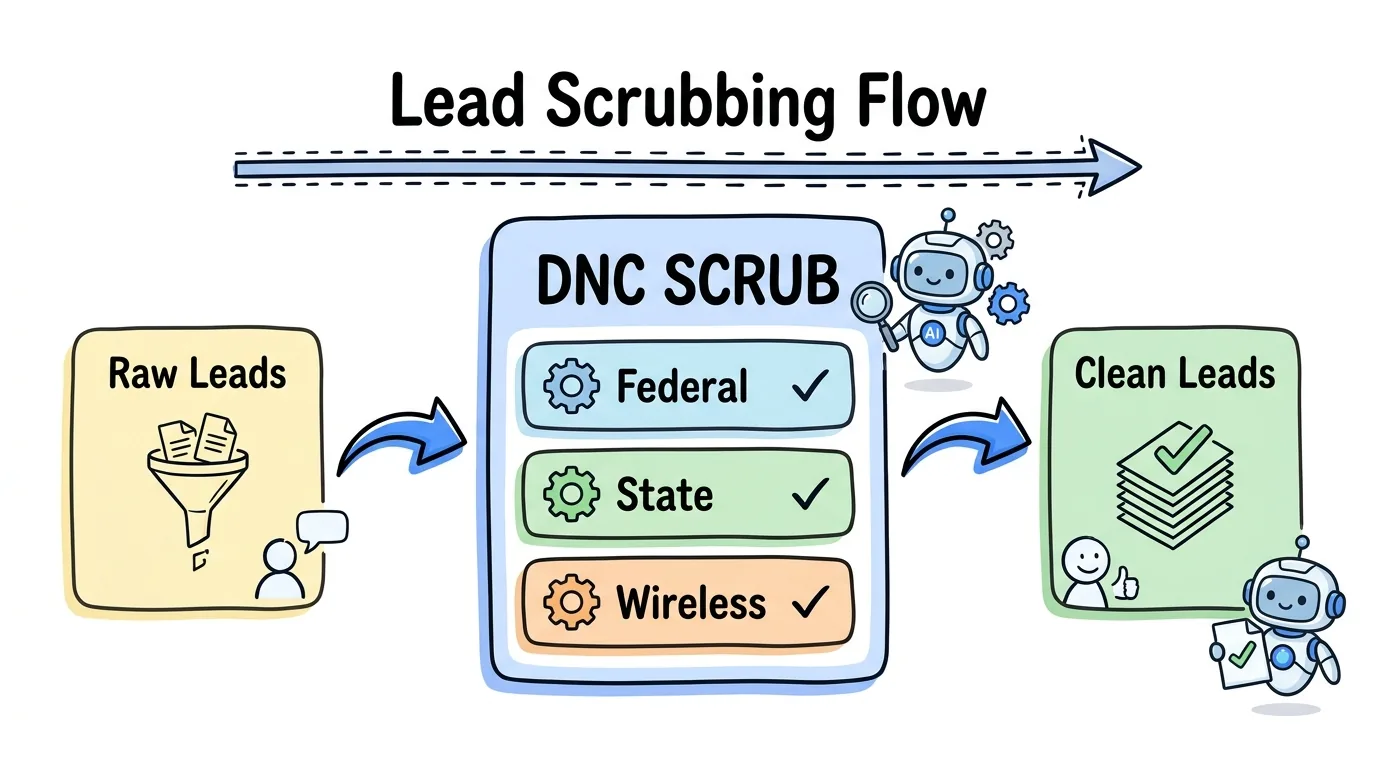
DNC scrubbing checks every lead against the federal and state Do-Not-Call registries plus wireless and litigator lists before you route it. Here is how it works.

Rafael Hernandez
Founder & CEO
Ex-Microsoft SWE · $10M+ PPL ad spend
I hope you enjoy reading this blog post. If you want to try Lead Distro AI for free, click here.
Author: Rafael Hernandez | Founder & CEO of Lead Distro AI
DNC scrubbing is the process of checking every phone number in your lead file against the federal and state Do-Not-Call registries, plus wireless and known-litigator databases, and then removing or flagging the numbers you are not legally allowed to call. For lead sellers, dnc scrubbing is what stops a routed lead from turning into a telemarketing violation the moment a buyer dials it. The Federal Trade Commission requires telemarketers to scrub their call lists against the National Do-Not-Call Registry at least every 31 days, and many states run their own lists on top of that. Skipping the scrub is one of the fastest ways to draw a consumer complaint, an FTC civil penalty, or a private lawsuit.
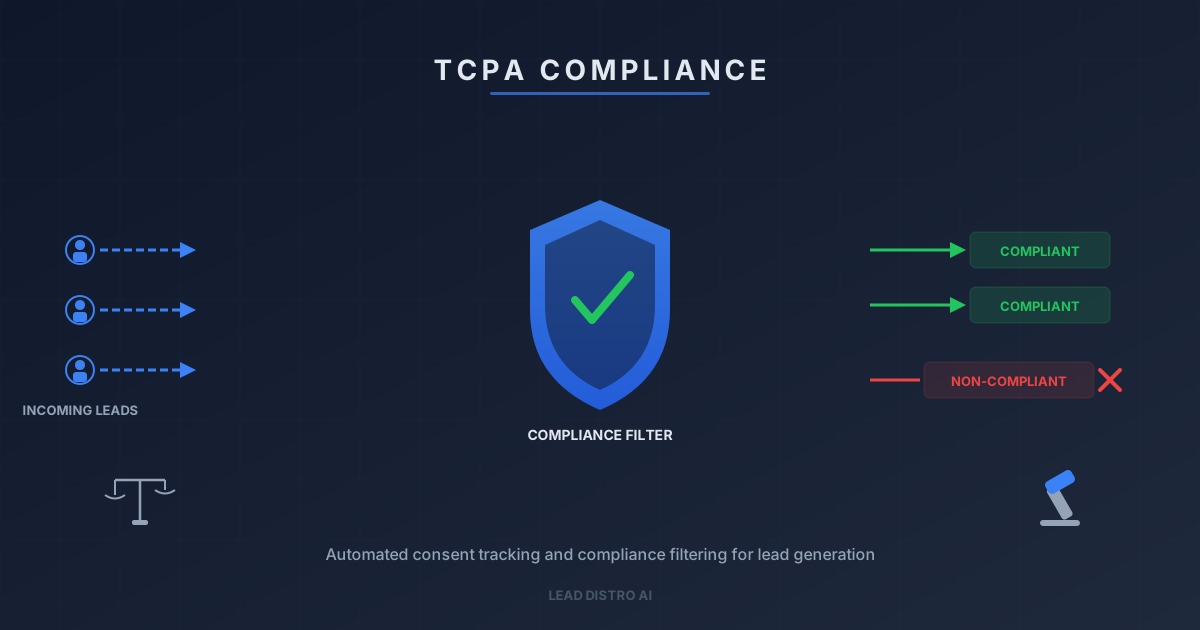
In practice, dnc scrubbing runs in four layers: the national registry, state registries, wireless identification with reassigned-number checks, and a litigator scrub that filters out serial plaintiffs. Automated lead scrubbing folds all four into the intake step so a bad number never reaches a buyer. This guide explains each registry, the 31-day rule, how dnc scrubbing differs from TCPA consent, and how to wire scrubbing into a ping-post distribution flow so compliance is enforced before money changes hands.
Key Takeaways
- DNC scrubbing removes numbers you cannot legally call. It checks the federal registry, state lists, wireless data, and litigator databases before a lead is distributed to any buyer.
- The 31-day rule is federal law. The FTC's Telemarketing Sales Rule requires scrubbing against the National Do-Not-Call Registry at least once every 31 days.
- DNC is not the same as consent. Scrubbing the registry does not give you TCPA permission to autodial a cell phone. Those are two separate legal obligations.
- State lists and reassigned numbers matter too. Several states run their own registries, and the FCC's Reassigned Numbers Database blocks calls to recycled numbers.
- Automated scrubbing belongs at intake. Lead Distro AI runs a TCPA litigator scrub through its Blacklist Alliance integration and applies per-buyer suppression lists before a lead routes, so a flagged number is stopped before a buyer can dial it.
What DNC Scrubbing Means for Lead Sellers
Every phone-based lead you sell carries call risk, and that risk transfers to whoever dials the number. A lead seller who delivers a number sitting on the Do-Not-Call Registry hands the buyer a potential violation and damages the relationship the moment a complaint lands. That is why dnc compliance is a selling point, not just a legal chore. Buyers pay more for lists they can call safely.
DNC scrubbing solves this by validating each record against the registries before distribution. It answers a simple question for every number: are we allowed to place a marketing call here today? If the answer is no, the record is suppressed or routed only to a channel that has an exemption. Getting this right is the foundation of the broader compliance program covered in our guide to TCPA compliance for lead distribution.
The Federal Do-Not-Call Registry
The National Do-Not-Call Registry is run by the Federal Trade Commission. Consumers add their numbers for free at donotcall.gov, and telemarketers access the list through the separate seller portal at telemarketing.donotcall.gov. Access is subscription-based: the first five area codes are free, and the FTC charges an annual fee per additional area code, with an annual cap.
The core rule comes from the FTC's Telemarketing Sales Rule (16 CFR Part 310). Telemarketers must scrub their calling lists against the registry at least every 31 days and drop any number a consumer has registered. Two exemptions apply. An established business relationship lets you call an existing customer for up to 18 months after their last purchase, and a consumer inquiry or application allows calls for up to 3 months. The rule also offers a safe harbor: if you maintain written procedures, train staff, and use a registry version no more than 31 days old, an isolated error is defensible. The FTC's compliance guide spells out each requirement.
State Do-Not-Call Lists
The federal registry is the floor, not the ceiling. A number of states maintain their own do-not-call lists and telemarketing statutes that layer stricter rules on top of federal law. Florida's Telephone Solicitation Act, often called a mini-TCPA, is the best-known example: it tightened consent standards and narrowed calling windows for anyone contacting Florida consumers. Other states run separate registries or impose their own call-time and holiday restrictions.
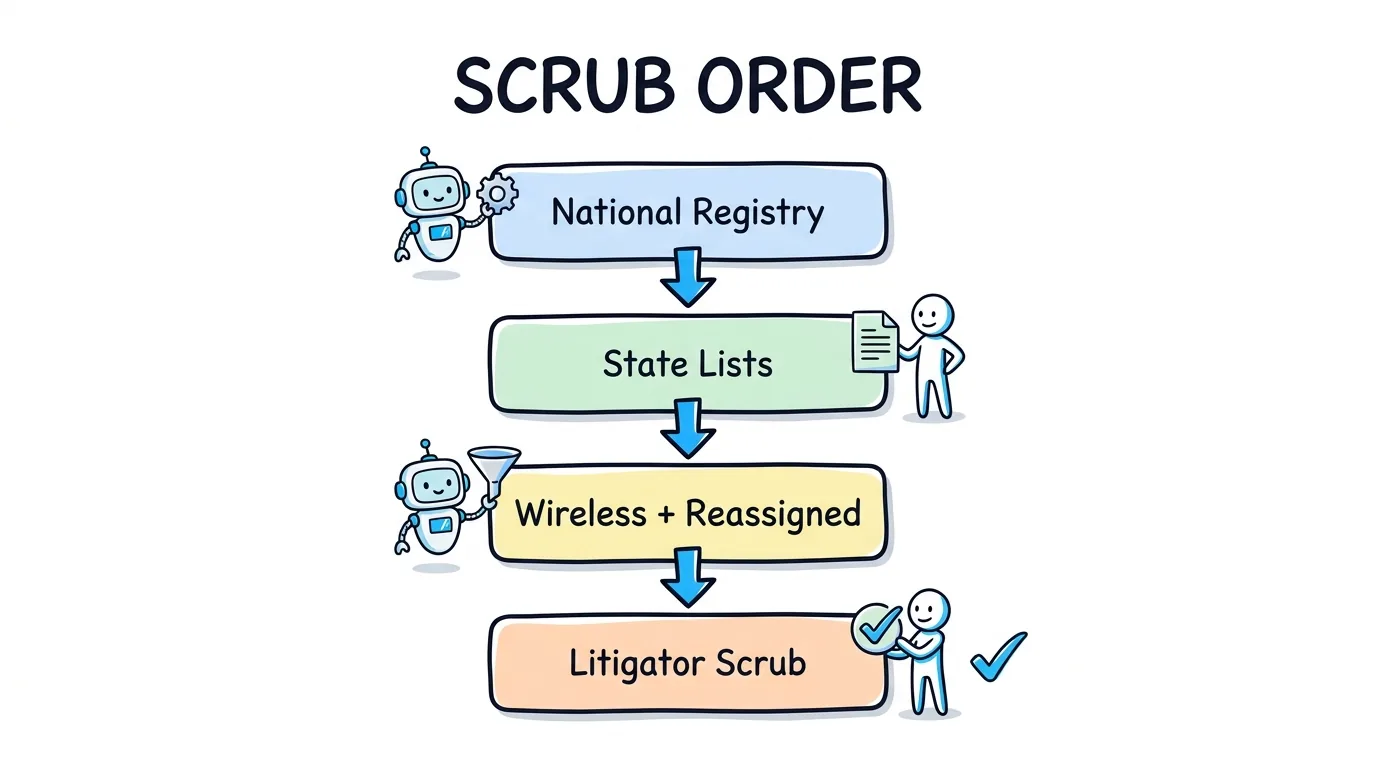
For a lead seller distributing into multiple states, this means scrubbing against each relevant state list based on the consumer's location, not just the national file. Automated lead scrubbing handles this by mapping each number to its state and applying that state's ruleset before the record is cleared for routing.
Wireless and Reassigned-Number Scrubbing
Two more layers protect against the highest-liability calls. First, a wireless scrub identifies which numbers are cell phones, because the TCPA restricts autodialed and prerecorded calls or texts to wireless numbers without prior express written consent. Knowing a number is wireless changes how it can be contacted.
Second, the FCC operates the Reassigned Numbers Database, which tells you whether a number has been disconnected and reassigned to a new subscriber since the date consent was obtained. Checking a number against the database and getting a "no match" result provides a safe harbor against liability for calling a reassigned number. On top of these, many sellers run a litigator scrub against third-party databases of known serial TCPA plaintiffs, filtering out the small group of people who file the majority of lawsuits. Together, wireless, reassigned, and litigator checks close the gaps the registries alone miss, a point emphasized in our breakdown of TCPA litigation risks for lead buyers.
DNC Scrubbing vs TCPA Consent
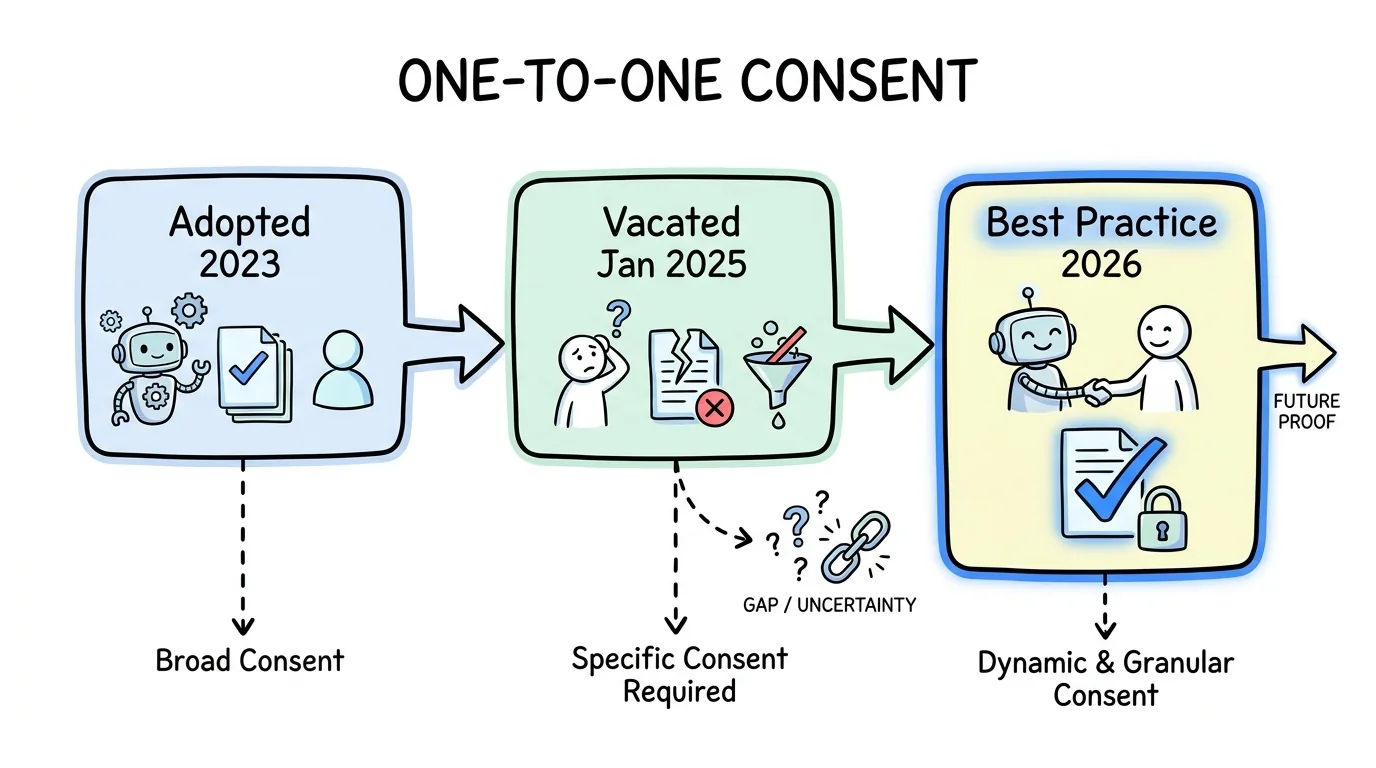
The single most common mistake in lead compliance is treating a clean DNC scrub as permission to autodial. It is not. Scrubbing tells you a number is not on a suppression list. Consent tells you the consumer agreed to be contacted. You need both, and they come from different places.
| Factor | DNC scrubbing | TCPA consent |
|---|---|---|
| Governing rule | FTC Telemarketing Sales Rule | FCC Telephone Consumer Protection Act |
| What it checks | Is the number on a do-not-call list | Did the consumer agree to be contacted |
| Applies to | Marketing calls to registered numbers | Autodialed or prerecorded calls and texts to cell phones |
| How you satisfy it | Scrub against registries every 31 days | Capture express written consent per seller |
| When it refreshes | At least every 31 days | At the point of lead capture |
A properly consented lead can still sit on a state DNC list, and a number absent from every registry can still lack the written consent an autodialer requires. Compliant lead selling treats the two as parallel checks that both have to pass.
How DNC Scrubbing Fits a Ping-Post Flow
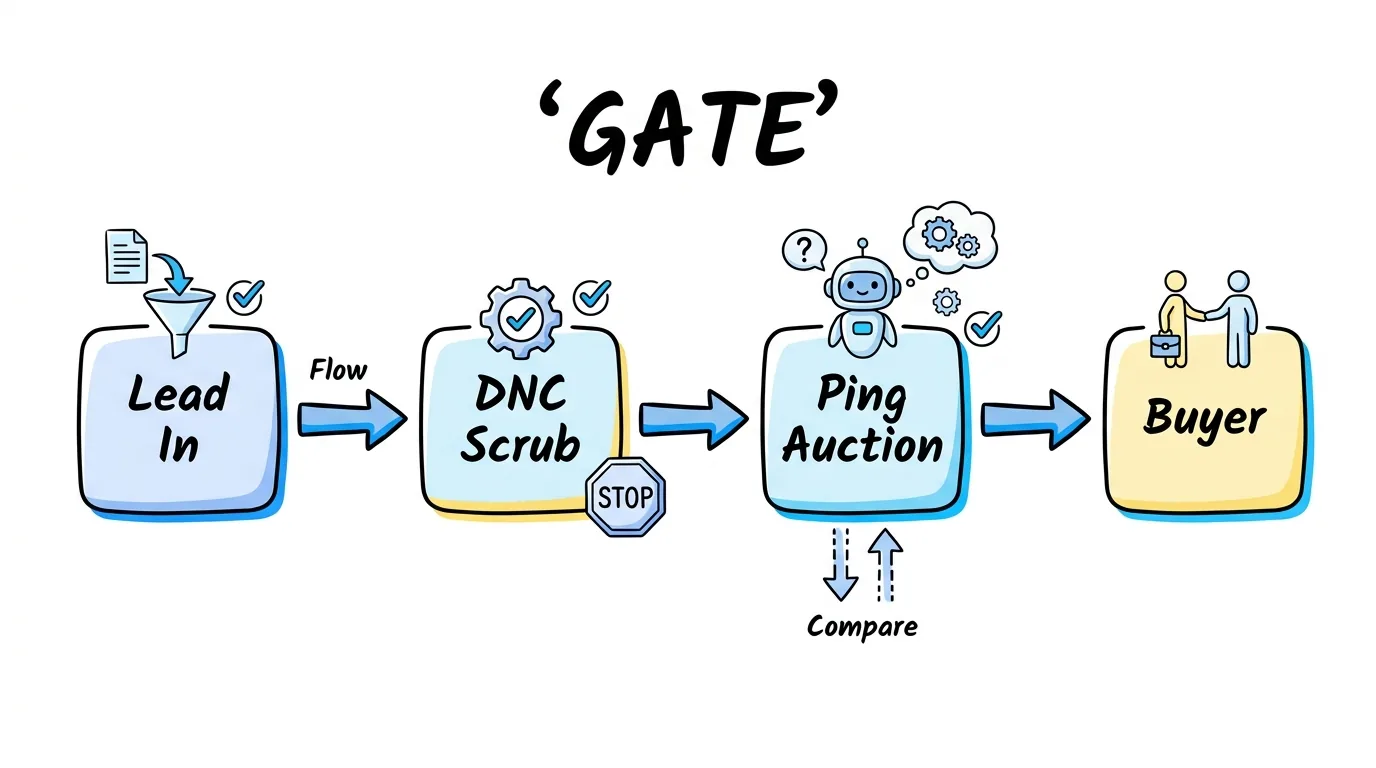
In a ping-post system, scrubbing runs at intake, before the ping auction fires. A lead arrives from a vendor or form, the platform validates the number against the registries and databases above, and only clean records enter the auction where buyers bid. Numbers that fail are rejected with a reason code and never billed, the same order of operations used in rules-based lead filtering. This sequence is detailed in our walkthrough of how a ping-post system works.
"The cheapest violation to prevent is the one that never gets distributed," says Rafael Hernandez, Founder and CEO of Lead Distro AI. "Scrubbing at intake means a bad number is caught before it ever reaches a buyer, so nobody pays for a lead they cannot legally call." You can see how this runs end to end in the product tour, and per-buyer suppression lists add a final layer so specific numbers stay blocked from delivery.
FAQ
What is DNC scrubbing?
DNC scrubbing is the practice of comparing every phone number in a lead file against the federal and state Do-Not-Call registries, along with wireless and known-litigator databases, and removing or flagging the numbers you are not allowed to call. It runs before leads are distributed so a buyer never receives a record that would trigger a telemarketing violation when dialed. For lead sellers, it protects both legal standing and buyer trust.
How often do I have to scrub against the DNC registry?
The FTC's Telemarketing Sales Rule requires telemarketers to scrub their calling lists against the National Do-Not-Call Registry at least once every 31 days. Using a registry version older than 31 days breaks the safe harbor defense. Most lead platforms scrub continuously at intake rather than on a fixed 31-day cycle, which keeps every distributed number current and removes the risk of an expired list.
Is DNC scrubbing the same as TCPA consent?
No. DNC scrubbing confirms a number is not on a do-not-call suppression list. TCPA consent confirms the consumer agreed to be contacted, which is required before autodialing or texting a cell phone. A number can pass the scrub and still lack valid consent, and a consented lead can still appear on a state list. Compliant lead selling requires both checks to pass independently.
Do I need to scrub state Do-Not-Call lists too?
Yes, if you distribute leads into states that maintain their own registries or telemarketing statutes. Several states, such as Florida with its Telephone Solicitation Act, add stricter consent and calling-window rules on top of federal law. Scrubbing should map each number to its state and apply that state's ruleset, not only the national registry, before the record is cleared for routing to a buyer.
What is a litigator scrub?
A litigator scrub checks phone numbers against third-party databases of known serial TCPA plaintiffs and professional complainants. A small number of people file a large share of telemarketing lawsuits, so removing their numbers before distribution sharply reduces litigation exposure. It is not required by statute, but most high-volume lead sellers run it alongside the federal and state DNC scrub as standard risk management.
Conclusion
DNC scrubbing is not a single lookup. It is four coordinated checks, the national registry, state lists, wireless and reassigned-number data, and a litigator scrub, all running before a lead is ever routed. Handled manually, it is slow and easy to get wrong. Handled at intake by your distribution platform, it becomes invisible: clean leads flow to buyers and violations are stopped at the door. If you sell or route phone leads, build scrubbing into the intake layer and treat DNC compliance and TCPA consent as separate, non-negotiable gates. Start a 7-day Lead Distro AI trial to run litigator scrubbing, apply suppression lists, and route leads from one platform.
About the Author
Founder & CEO of Lead Distro AI & Great Marketing AI
UC Berkeley graduate and former software engineer at Microsoft. Rafael built Lead Distro AI after managing over $10M in ad spend for performance marketing agencies (pay-per-lead and pay-per-call), including running campaigns for Neil Patel. He combines deep software engineering expertise with hands-on performance marketing experience to build tools that help these agencies scale profitably.
About Lead Distro AI
Lead Distro AI: AI-Powered Lead Distribution & Call Tracking That Maximizes ROI
The modern platform for pay-per-lead and pay-per-call agencies. Route, score, and deliver leads with AI-powered automation and real-time P&L tracking. Built for performance marketing agencies and lead buyers across legal, insurance, mortgage, solar, and home services verticals.
4 Distribution Methods
Waterfall, Round Robin, Weighted, Ping-Post
Ping-Post Auctions
Real-time bidding with sub-second routing
Real-Time P&L Reporting
Track revenue, costs, and profit per campaign
Call Tracking
Assign tracking numbers, record calls, and attribute conversions
Lead Scoring
Score every lead before routing to maximize conversion
Partner Portal
Self-serve dashboard for buyers to track leads