AI Lead Scoring: How Machine Learning Improves Lead Quality
Learn how AI lead scoring works, why it outperforms rule-based scoring, and how to use it to reduce chargebacks and increase buyer retention in your PPL operation.

Rafael Hernandez
Founder & CEO
Ex-Microsoft SWE · $10M+ PPL ad spend
I hope you enjoy reading this blog post. If you want to try Lead Distro AI for free, click here.
Author: Rafael Hernandez | Founder & CEO of Lead Distro AI
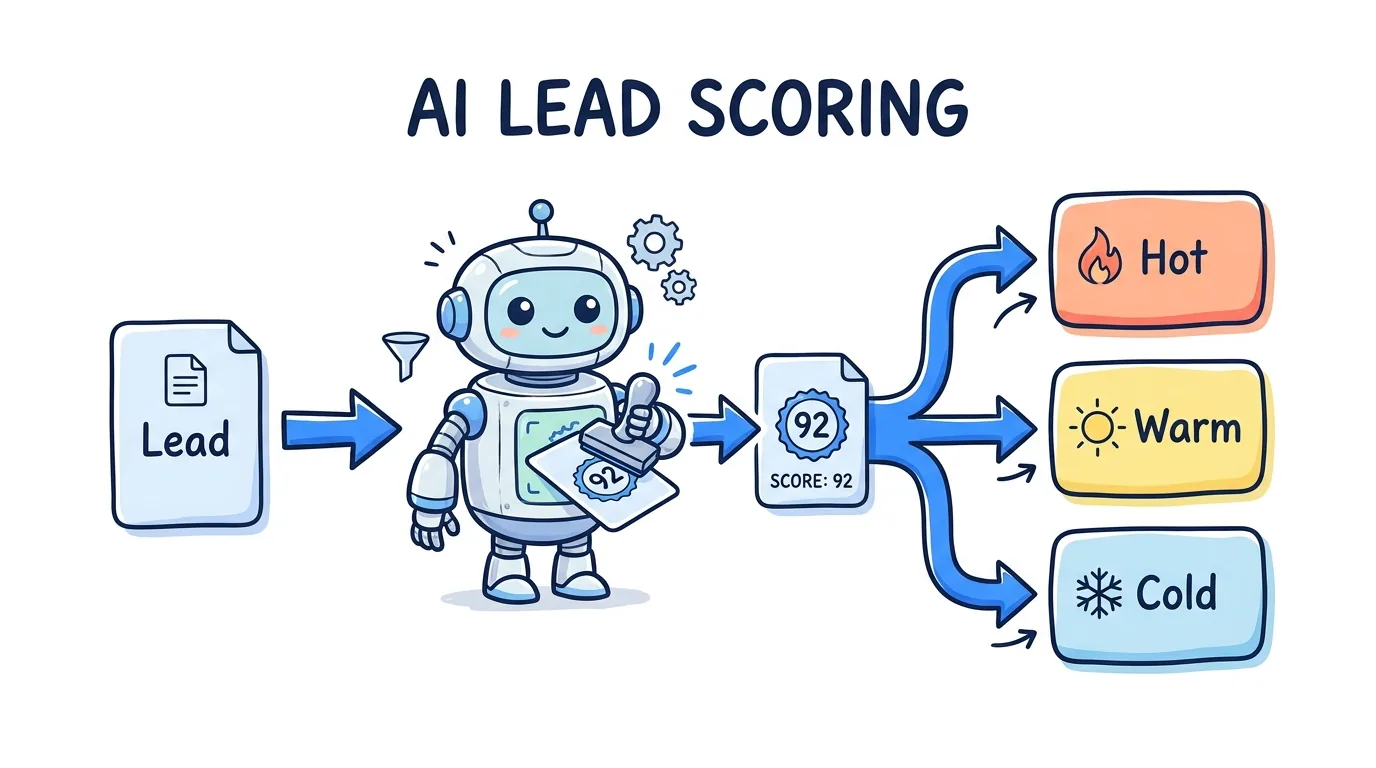
AI lead scoring uses machine learning models to evaluate the quality of every incoming lead before it reaches a buyer. Unlike traditional rule-based scoring, which flags leads based on static criteria like missing phone numbers or blacklisted domains, AI scoring evaluates the full context of a lead submission and assigns a quality probability score in real time. Lead Distro AI's AI lead scoring engine scores every inbound lead in under one second using a model trained on conversion patterns from your specific campaigns. Salesforce's State of Sales report found that high-performing sales teams are significantly more likely than underperformers to use AI, with predictive lead scoring and lead prioritization among the top reported use cases.
Last Updated: May 16, 2026
Start your free trial of Lead Distro AI and add AI scoring to every lead your agency distributes.
Key Takeaways
- AI lead scoring evaluates the full context of a submission, not just individual field validation rules
- Scores are assigned in under one second before routing, so buyers only receive leads that pass your minimum threshold
- AI scoring reduces chargebacks by catching low-quality leads before delivery, with the magnitude depending on your baseline chargeback rate and source mix
- Three distinct approaches power modern lead scoring: rule-based engines, classical ML models (XGBoost, random forest), and LLM scoring (Claude, GPT). Each has different tradeoffs on cost, latency, and explainability
- Scoring improves over time as the model learns from your campaign's historical conversion data
- Lead Distro AI scores every lead on every plan, with no additional cost or setup required
What AI Lead Scoring Evaluates
Traditional validation checks individual fields: Is the phone number 10 digits? Is the email formatted correctly? Does the zip code match the state?
AI lead scoring evaluates the lead holistically across multiple dimensions simultaneously:
Contact Quality Signals
- Phone validity: Reachable vs. disconnected vs. VoIP/VOIP line
- Email validity: Deliverable vs. invalid domain vs. known spam trap
- Address verification: Residential address vs. commercial vs. PO box vs. no match
Intent and Behavioral Signals
- Form completion patterns: Time spent on form, fields completed in sequence vs. auto-filled
- Session data: Traffic source, device type, time on page before submission
- Consistency check: Do the declared intent signals match the submitted data? (e.g., "seeking insurance" but submits a commercial address)
Historical Pattern Signals
- Source quality history: What percentage of past leads from this source converted?
- Duplicate probability: Similar submissions from this email, phone, or address in recent history (see our full guide on duplicate lead detection)
- Fraud pattern matching: Submission patterns consistent with known lead fraud (bot traffic, mass form submission)
Vertical-Specific Signals
For legal leads: Was the accident date plausible? Does the injury type match the claimed circumstance? For insurance: Does the coverage type match the declared need and demographic? For mortgage: Does the loan amount align with the declared property and income signals?
The Three AI Lead Scoring Methodologies in 2026
Not every "AI lead scoring" tool actually uses the same technology. Three distinct approaches dominate modern stacks, and the right one depends on your data volume, latency budget, and explainability needs.
1. Rule-Based Scoring (the original baseline)
Rule-based engines apply hand-coded if-then logic: if the phone is VoIP, subtract 20 points; if the zip code is on the blocklist, reject outright. They run in single-digit milliseconds, require no training data, and are fully explainable, with every rejection mapped to a named rule.
The tradeoff is rigidity. Rules only catch the fraud and quality patterns you have already seen, and they break in new ways every time a source mix shifts. Most lead distribution stacks still use rule-based scoring as a first-pass filter even when an ML or LLM model sits behind it.
2. Classical ML Scoring (XGBoost, random forest, logistic regression)
Classical ML is what most production lead scoring systems run today. A gradient-boosted tree model like XGBoost is trained on your historical leads with the outcome labeled (sold, disputed, converted to client). The model learns which combinations of fields predict each outcome and assigns a probability score on new leads.
Tradeoffs:
- Training data needs: Workable starting around 5,000 to 10,000 labeled leads. More data improves accuracy.
- Latency: 5 to 50 milliseconds per lead at inference, fast enough for real-time routing.
- Explainability: Tools like SHAP values can attribute the score to specific features. Better than a neural network, weaker than rules.
- Cost: Inference is cheap (sub-cent per lead on commodity infra). Training and retraining requires a data scientist or a managed platform.
Salesforce Einstein, HubSpot's Predictive Lead Scoring, and most in-house lead scoring models built on Snowflake or Databricks fall in this category. Salesforce's Einstein Lead Scoring documentation describes a model that learns from each org's own sales history rather than a one-size-fits-all baseline.
3. LLM Scoring (Claude, GPT, Gemini)
The newest approach uses large language models to evaluate leads. Instead of training a custom model, you prompt an LLM with the lead's submission, vertical context, and your quality criteria, and the model returns a score plus a natural-language rationale.
Tradeoffs:
- Training data needs: Zero for the base model. The model relies on instruction-following and your prompt's specificity.
- Latency: 300 milliseconds to 2 seconds per lead at typical API speeds. Slower than classical ML, often acceptable for non-real-time routing.
- Explainability: Very high. The model can return a written explanation of why a lead scored 72 vs 91. This is uniquely valuable for chargeback disputes.
- Cost: Per Anthropic's pricing page, Claude Haiku and GPT-4o-mini class models run roughly $0.0001 to $0.001 per lead depending on prompt size. Frontier models (Claude Opus, GPT-4o) run 10 to 50 times higher.
- Reliability: LLMs hallucinate. A scoring system that occasionally invents a reason needs deterministic guardrails layered on top.
Which Approach Lead Distro AI Uses
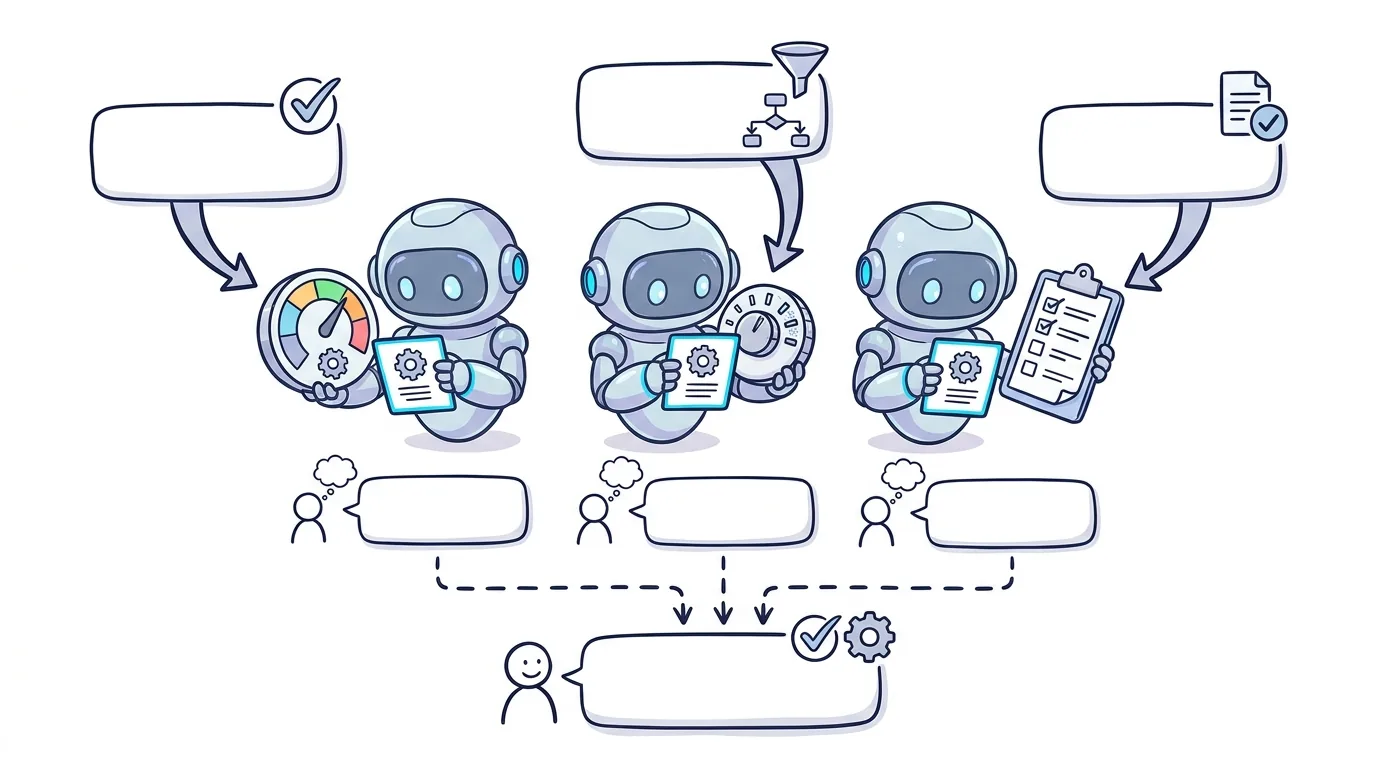
Lead Distro AI runs a stacked architecture: a deterministic rule layer for instant rejections (VoIP, blocklist, format failures), a classical ML model trained per-campaign on historical conversion data for the primary quality score, and an optional LLM layer for high-value verticals where buyers pay $150 or more per lead and want a written quality rationale on every delivery. This is similar to how mature fintech fraud stacks combine rules + ML + LLMs rather than picking one.
LLM vs Classical ML for Lead Scoring: When Each Wins
| Dimension | Classical ML (XGBoost) | LLM (Claude / GPT) |
|---|---|---|
| Training data required | 5K to 10K labeled leads minimum | None for base model |
| Cold-start performance | Poor without history | Strong out of the box |
| Latency per lead | 5 to 50 ms | 300 ms to 2 s |
| Cost per 1,000 leads | Under $0.01 inference | $0.10 to $5+ depending on model |
| Explainability | Moderate (SHAP values) | High (written rationale) |
| Drift handling | Manual retraining cadence | Adapts via prompt updates |
| Best for | High-volume verticals with historical data | New verticals, low-volume buyers, dispute-heavy categories |
For most production PPL operations with at least 12 months of conversion history, classical ML still wins on cost and latency. LLMs shine on three specific cases: launching a new vertical with no labeled data, scoring inbound leads where the buyer expects a human-readable quality note, and high-stakes verticals where the cost of a wrong call exceeds the per-lead inference cost.
Andrew Ng has argued that the bigger near-term lift for most teams is not picking ML over LLMs, it is building the data pipeline that lets either one actually learn from outcomes. Lead scoring tends to fail at the labeling step, not the model step.
Conversion Impact: What Each Approach Actually Moves
Quantifying conversion lift from scoring is harder than vendor marketing suggests. The honest version, framed qualitatively:
- Rule-based scoring typically produces a step-change improvement when it replaces no scoring at all (blocks the worst 5 to 15 percent of inventory). After that, additional rules show diminishing returns.
- Classical ML scoring layered on top of rules typically produces a second step-change by catching contextual quality signals rules cannot see (cross-field consistency, source-quality interaction effects). Forrester's research on predictive lead scoring has consistently reported that organizations with mature predictive scoring outperform peers on conversion rate, though the magnitude varies widely by vertical.
- LLM scoring added on top of ML produces the smallest delta on raw conversion rate, but the largest delta on chargeback dispute outcomes because the model can return a written defense of every score.
The dollar-impact lever is almost always chargeback reduction and buyer retention, not raw conversion lift. A 5-point drop in chargeback rate on a $1M annual revenue book is $50,000 in recovered margin, before counting the compounding effect of buyers raising their caps.
Rule-Based Scoring vs AI Scoring
| Dimension | Rule-Based | AI Scoring |
|---|---|---|
| Evaluation method | Static pass/fail rules | Probabilistic quality score |
| Updates | Manual rule changes | Learns from new conversion data |
| Context awareness | No, evaluates fields in isolation | Yes, evaluates the full submission holistically |
| Fraud detection | Catches known patterns only | Identifies novel fraud patterns |
| False positive rate | High (good leads rejected by rigid rules) | Lower (contextual evaluation) |
| Setup required | Yes, requires rule configuration | No, model runs immediately |
| Improves over time | No | Yes |
The core limitation of rule-based scoring: Rules can only catch what you already know to be bad. They cannot catch new fraud patterns, subtle quality signals that require cross-field analysis, or the kinds of probabilistic quality signals that only emerge from historical conversion data.
AI scoring catches what rules miss. Compare the best lead scoring software to see how AI scoring stacks up against legacy tools.
How Lead Distro AI's Scoring Works
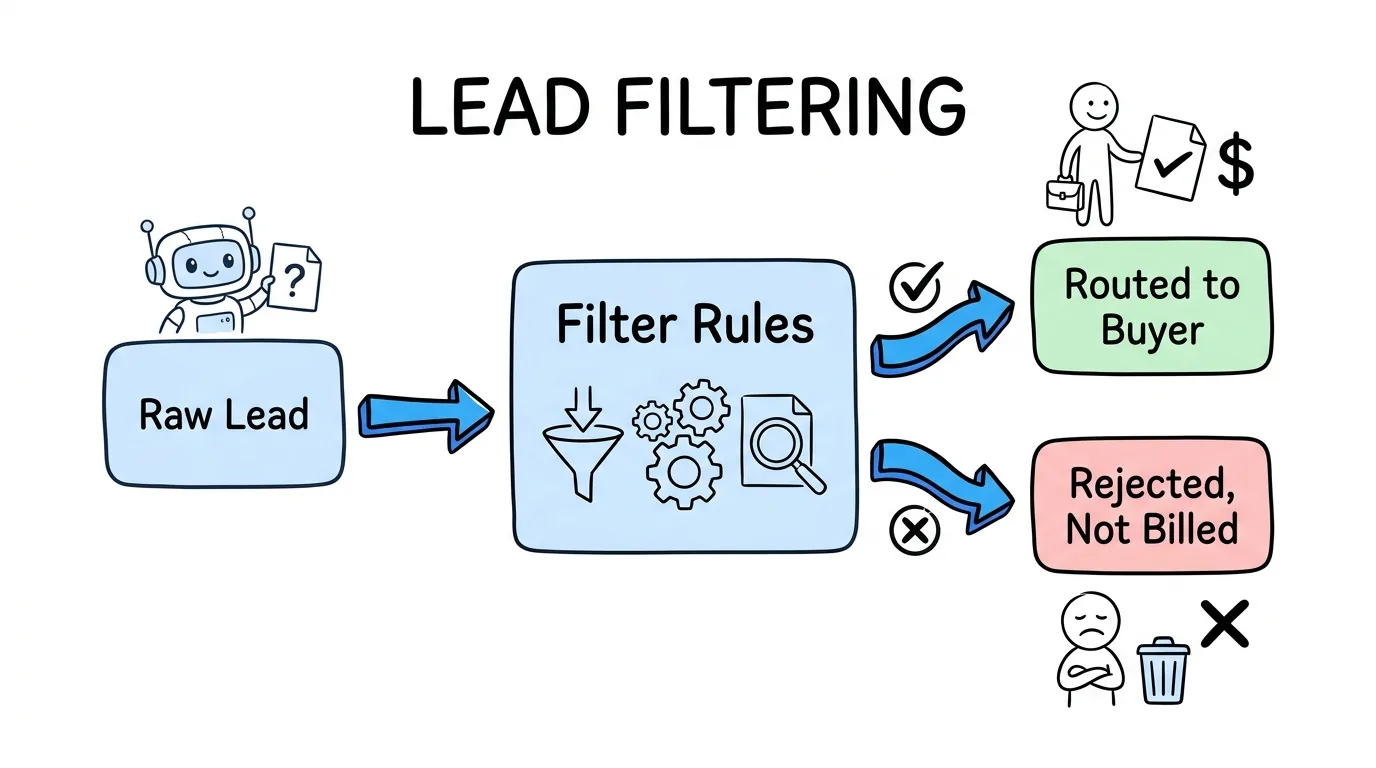
Every lead that enters Lead Distro AI passes through the scoring pipeline before reaching the routing engine:
- Lead arrives via webhook, API, or direct post
- Data extraction: All submitted fields are parsed and normalized
- Validation layer: Basic format checks (phone structure, email format)
- AI model evaluation: Full submission is evaluated against the trained model; quality score assigned (0-100)
- Threshold check: Is the score above your configured minimum?
- Pass: Lead enters routing queue and is delivered to buyer
- Fail: Lead is rejected, logged with rejection reason, and not delivered
The entire process takes under one second.
Setting Score Thresholds
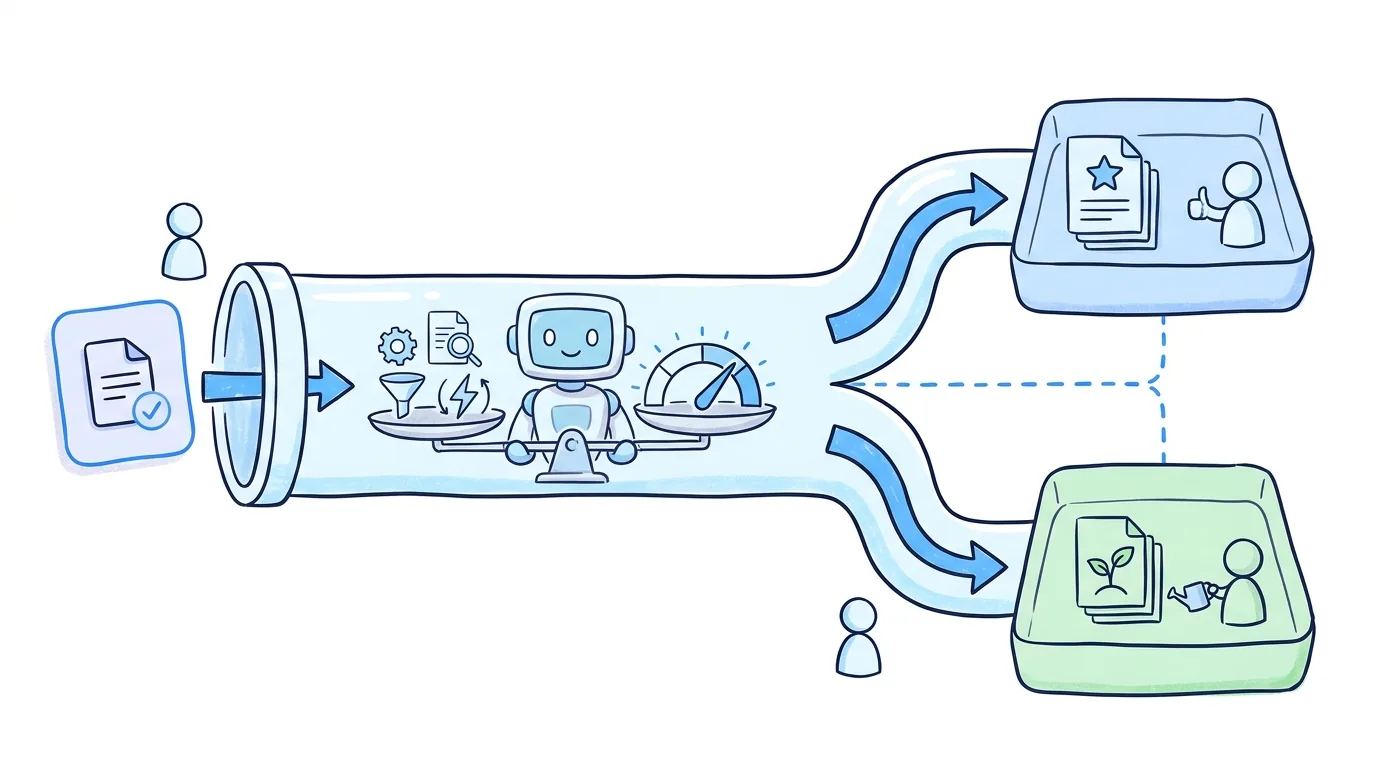
You configure the minimum acceptable score per campaign or per buyer. A buyer who has experienced quality issues can have a higher threshold applied to their deliveries. A buyer on volume pricing may accept a lower threshold in exchange for higher fill rate.
Threshold strategy:
- Premium buyers (exclusive, high-CPL): Score threshold 70-80
- Standard buyers (shared, mid-CPL): Score threshold 50-65
- Volume buyers (aged, low-CPL): Score threshold 30-45
This creates a natural quality tier from your lead inventory without manually sorting leads.
The Business Impact of AI Scoring
Chargeback Reduction
Chargebacks are the biggest margin leak in lead distribution. When buyers dispute lead quality, they either receive credits (reducing your revenue) or they churn (costing you a buyer relationship). AI scoring reduces the bad leads that reach buyers, which directly reduces chargeback rates.
Agencies that deploy contextual scoring on top of basic validation generally see chargeback rates fall once the model has 30 to 60 days of campaign history to learn from. The exact magnitude varies with the baseline rate, the source mix, and how strict the buyer-side QA process is. For more on the economics of chargebacks and lead quality, see our lead generation statistics roundup. The arithmetic is unforgiving: at $50 per lead and 200 leads per day, a 10-point chargeback reduction recovers $1,000 per day in revenue that would otherwise be credited back to buyers.
Buyer Retention
Buyers who receive consistently high-quality leads increase their caps and stay in your network. Buyers who receive bad leads reduce their caps and eventually churn. AI scoring is invisible to your buyers; they just notice that the leads convert better.
Source Optimization
AI scoring generates per-source quality reports. You can see exactly which lead sources produce high-scoring leads and which produce low-quality inventory. This data informs source decisions: invest more in high-scoring sources, renegotiate pricing with low-scoring sources, or drop them.
The P&L dashboard in Lead Distro AI shows quality scores, chargeback rates, and margin by source in real time.
AI Lead Scoring by Vertical
Legal/PI Scoring
PI lead scoring evaluates accident plausibility (date, type, injury description consistency), claimant verification signals (first-party vs. third-party indicators), and prior representation indicators. High-scoring PI leads command $150-400 from law firm buyers. Low-scoring leads generate chargebacks and damage relationships with buyers paying top dollar. Learn more about legal lead distribution.
Insurance Scoring
Insurance lead scoring evaluates coverage type consistency, licensed state matching, and intent verification (actively shopping vs. informational browse). ACA and Medicare leads have strict eligibility windows; scoring flags submissions outside enrollment periods or from ineligible demographics.
Mortgage Scoring
Mortgage lead scoring evaluates loan-to-value plausibility, income-to-loan-amount consistency, and recency of intent signal. Speed is critical in mortgage: a high-scoring lead delivered in under 500ms is worth far more than the same lead delivered 10 minutes later. Learn more about mortgage lead distribution.
Setting Up AI Scoring in Lead Distro AI
No setup is required. AI scoring runs automatically on every lead in every campaign from the moment you create your account. Default thresholds are pre-configured based on vertical best practices. You can:
- Adjust score thresholds per campaign in the campaign settings
- Set different thresholds per buyer in the buyer configuration
- View score distributions in the analytics dashboard
- See per-lead scores in the lead detail view
- Export scoring data alongside conversion data for analysis
Take the product tour to see scoring in action.
The Industry View on AI Lead Scoring
Tomasz Tunguz, managing director at Theory Ventures and one of the most-cited SaaS metrics analysts, has written extensively on how AI is reshaping go-to-market. His central observation is that AI's biggest GTM lift is not generating more leads, it is qualifying the ones already flowing in: the bottleneck for most B2B and PPL operations is not top of funnel volume, it is the ratio of accepted to disputed leads downstream.
That framing matches what mature lead distribution operators report. Scoring is not a top-of-funnel growth lever, it is a margin-protection lever. Buyer trust compounds when chargeback rates stay low, and AI scoring is the most reliable way to keep them low once volume scales past what manual QA can handle.
On the model side, Anthropic's published guidance for using Claude in production classification tasks emphasizes the same hybrid pattern Lead Distro AI follows: deterministic rules for the obvious decisions, an LLM for the contextual edge cases where rules cannot capture intent. That document explicitly recommends combining rule-based filtering with model-based classification rather than relying on either in isolation, which is the architecture used here.
How scoring fits into the broader distribution stack is also worth understanding. For background on how scored leads then get assigned to buyers, see our guide on what is lead routing and our comparison of the best lead routing software.
Frequently Asked Questions
How is AI lead scoring different from lead validation?
Lead validation checks individual fields for formatting and basic validity (is the phone number 10 digits? is the email domain real?). AI lead scoring evaluates the entire submission holistically using a machine learning model, assigning a probability score based on patterns across all fields and historical conversion data. Validation catches format errors; AI scoring catches quality signals.
Does AI scoring slow down lead delivery?
No. Lead Distro AI's scoring pipeline processes leads in under one second. The score is assigned before routing begins, and the entire process from lead receipt to buyer delivery typically completes in under 500 milliseconds.
Can I see why a lead was rejected?
Yes. Every rejected lead is logged with the primary rejection reason (score below threshold, specific quality flags) and is viewable in the Lead Distro AI dashboard. You can review rejections by source to identify systematic quality issues.
Does scoring improve over time?
Yes. The model learns from your campaign's historical data (leads that converted vs. leads that were disputed) and improves its scoring accuracy over time. Campaigns with longer history produce more accurate scores.
Can I turn off AI scoring for certain campaigns?
Yes. Scoring can be disabled per campaign, though it is enabled by default. Some use cases (aged lead distribution, economy-tier sales) operate without scoring.
How does AI lead scoring work for Medicare and senior insurance leads?
Medicare AI lead scoring is one of the most valuable applications because Medicare Advantage and Medicare Supplement carriers pay $25 to $80 per qualified senior lead and lose money fast on unqualified or out-of-state submissions. Lead Distro AI's model evaluates Medicare-specific signals (age proxy fields based on birth year, state licensing match against the buyer's appointed states, dual-eligible markers for Medicaid + Medicare, AEP timing of October 15 to December 7, and SEP qualifying events) and assigns a 0-100 score before the lead reaches a buyer. Most Medicare industry companies that built their own AI lead score calculation use a stacked model: a fraud check (TrustedForm, Jornaya, phone validation), a state-licensing check, and a conversion-probability model trained on which fields correlated with policy applications. Lead Distro AI bundles all three layers and adds buyer-specific score thresholds, so a top-tier Medicare carrier only receives leads scoring 80+ while a lower-tier buyer accepts 60+.
Can AI lead scoring replace TrustedForm or Jornaya?
No. TrustedForm and Jornaya capture consent evidence: they prove a consumer saw and accepted the buyer-specific disclosures at the moment of submission, which is the legal foundation for TCPA defense. AI lead scoring evaluates quality, meaning how likely the lead is to convert. The two work together. Lead Distro AI ingests TrustedForm and Jornaya tokens at intake, scores the lead, and forwards the consent token to the winning buyer. Skipping consent capture exposes you to TCPA penalties of $500 to $1,500 per call regardless of how good your scoring model is.
The Bottom Line
AI lead scoring is the difference between a lead distribution business that compounds and one that constantly firefights chargebacks. Every lead that reaches a buyer should have passed a quality bar. AI scoring enforces that bar automatically, at scale, on every transaction. For agencies evaluating unified scoring-plus-management platforms, see our best lead management software comparison ranking the top 6 by AI scoring, distribution, tracking, and P&L reporting.
AI scoring is included on every Lead Distro AI plan at no extra cost. Start your free trial or tour the dashboard to see scoring, routing, and buyer P&L in action.
About the Author
Founder & CEO of Lead Distro AI & Great Marketing AI
UC Berkeley graduate and former software engineer at Microsoft. Rafael built Lead Distro AI after managing over $10M in ad spend for performance marketing agencies (pay-per-lead and pay-per-call), including running campaigns for Neil Patel. He combines deep software engineering expertise with hands-on performance marketing experience to build tools that help these agencies scale profitably.
About Lead Distro AI
Lead Distro AI: AI-Powered Lead Distribution & Call Tracking That Maximizes ROI
The modern platform for pay-per-lead and pay-per-call agencies. Route, score, and deliver leads with AI-powered automation and real-time P&L tracking. Built for performance marketing agencies and lead buyers across legal, insurance, mortgage, solar, and home services verticals.
4 Distribution Methods
Waterfall, Round Robin, Weighted, Ping-Post
Ping-Post Auctions
Real-time bidding with sub-second routing
Real-Time P&L Reporting
Track revenue, costs, and profit per campaign
Call Tracking
Assign tracking numbers, record calls, and attribute conversions
AI Lead Scoring
Score every lead before routing to maximize conversion
Partner Portal
Self-serve dashboard for buyers to track leads