Best Platform for Managing Leads and Calls in One Place (2026)
Lead Distro AI manages both web form leads and inbound calls in one place, with lead scoring, 4 routing methods, and unified P&L. Compare 7 platforms for pay-per-call and pay-per-lead agencies.

Rafael Hernandez
Founder & CEO
Ex-Microsoft SWE · $10M+ PPL ad spend
I hope you enjoy reading this blog post. If you want to try Lead Distro AI for free, click here.
Author: Rafael Hernandez | Founder & CEO of Lead Distro AI
Last Updated: September 18, 2026
The best platform for managing both leads and calls in one place is Lead Distro AI. It natively routes web form leads and inbound phone calls on a single stack, with one buyer roster, one compliance database, real-time lead scoring, and one unified profit and loss view, starting at $297/month. For agencies selling both calls and leads, whether one platform handles both is the whole decision. Many agencies that sell both end up running a call routing tool for inbound calls plus a separate lead distribution stack for data leads, then bolt on a third tool for attribution. That fragmentation costs operators four to seven hours a week in reconciliation work and breaks closed-loop reporting, according to a 2025 Performance Marketing Association industry survey (PMA, 2025). Lead Distro AI was built to eliminate that duplicate stack by handling pay-per-call ring tree routing and four data-lead distribution methods in one platform with unified P&L, attribution, and TCPA compliance tooling.
Ringba is a strong tool for what it was designed to do, which is pay-per-call routing with ring trees, real-time bidding, and publisher payouts. The problem is that calls and leads are the same buyer behavior measured differently, and treating them as separate operational categories creates real costs: duplicate billing, broken margin tracking, fractured compliance audit trails, and lead-quality signals that never cross-pollinate. This guide explains why the "call tool plus a separate lead tool" pattern breaks down at scale, what a unified lead and call distribution software looks like operationally, and how to evaluate platforms that handle both natively.
Key Takeaways
- Lead Distro AI handles both data leads and inbound calls natively.
- For agencies, the practical test is whether one buyer can receive both a form lead and a phone call under a single payout, cap, and compliance record.
- Pay-per-call agencies that also sell data leads often run two or three platforms (one for calls, one for leads, a third tool for attribution), which fragments reporting and adds four to seven hours of weekly reconciliation work.
Call routing softwareand lead distribution software solve mechanically identical problems (route a buyer-intent signal to the highest-value buyer in real time), butcall routing softwareand lead software have historically lived in separate product categories.- A unified
lead and call distribution softwareconsolidates ring tree routing, ping post lead distribution, lead scoring, TCPA compliance, and unified P&L into one stack. - Lead Distro AI handles both natively at flat-rate pricing starting at $297/month.
The Best Platforms for Managing Leads and Calls in One Place
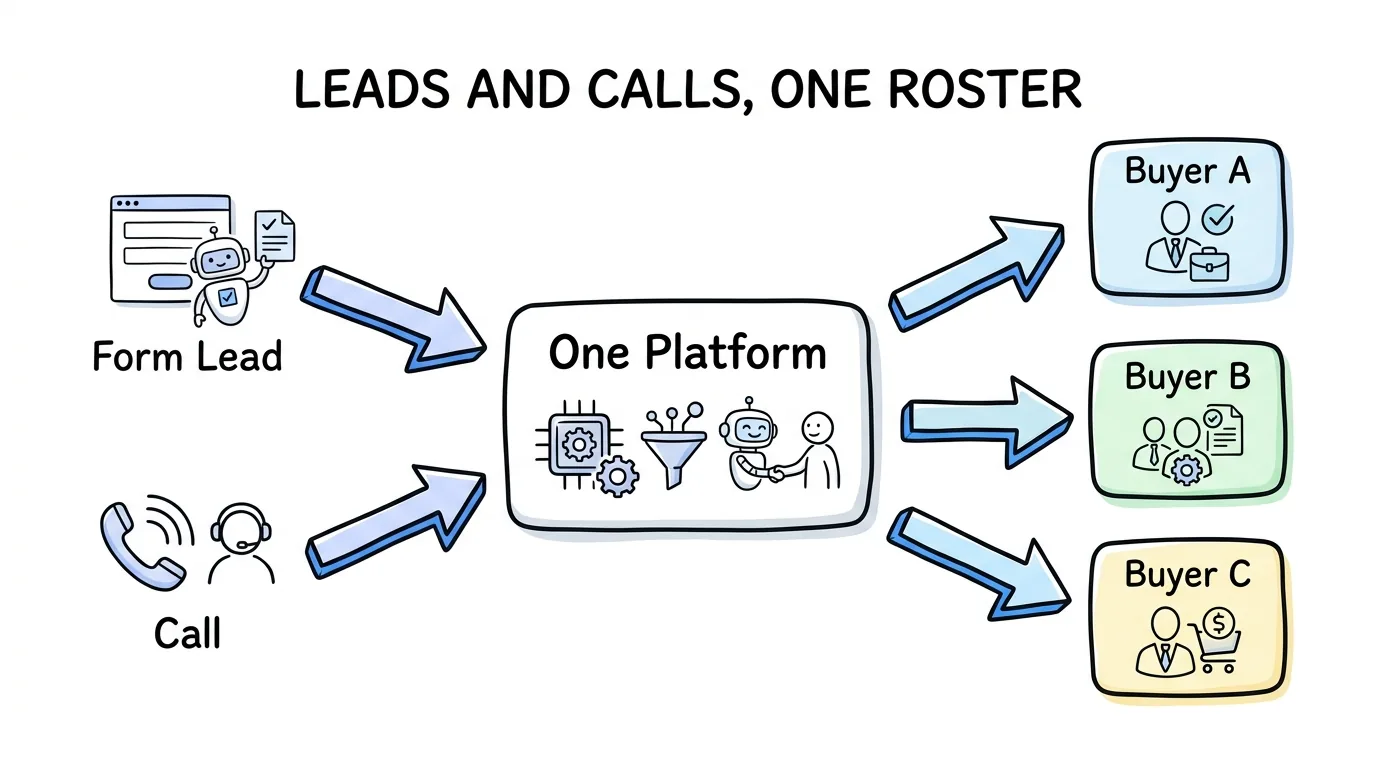
Agencies evaluating call tracking software often compare tools on call features alone, which quietly assumes the data-lead side is somebody else's problem. The table below lists the platforms most often named in this category. The question that matters for a pay-per-lead or pay-per-call agency is whether a single buyer can receive both a form lead and a phone call under one payout, one cap, and one compliance record.
| Platform | Call tracking | Best for |
|---|---|---|
| Lead Distro AI | Yes | Pay-per-lead and pay-per-call agencies running both surfaces |
| Ringba | Yes | Pay-per-call operations running ring trees |
| Retreaver | Yes | Real-time call routing driven by caller data and tags |
| Invoca | Yes | Enterprise advertisers needing AI conversation intelligence |
| CallRail | Yes | SMBs and agencies needing straightforward call attribution |
| CallTrackingMetrics | Yes | Call centers and complex IVR routing |
| WhatConverts | Yes | Marketing attribution reporting across lead sources |
In our view, Invoca, CallRail, CallTrackingMetrics, Retreaver, and WhatConverts are strong call tracking and attribution platforms, and Ringba is a strong ring tree routing platform. If you sell both calls and data leads, ask each vendor to show a single buyer receiving a form lead and a phone call under one payout, cap, and compliance record. Lead Distro AI does this natively, with four data lead distribution methods alongside call routing.
What This Means for Agencies Specifically
For an agency, the cost of the split is not the second subscription, it is the reporting. When a buyer takes 40 form leads and 12 calls in a week across two systems, there is no single view of what that buyer is worth, which means caps, price tests, and quality scoring all run on partial data. Agencies that route both surfaces through one platform can set a buyer cap that counts calls and leads together, apply the same rule-based scoring model to both through one lead distribution engine, and pull one compliance record when a buyer disputes a charge. That is the practical difference between call tracking software and a platform that runs an agency's whole book. Vertical operators see it most sharply in high-call categories like home services lead generation, where the same campaign produces both form fills and phone calls from the same ad spend.
Full side-by-side breakdowns of each platform are in our comparisons hub.
The Problem with Separating Leads from Calls
Splitting lead distribution and call routing software across separate platforms creates four operational problems that compound as agency volume grows. First, billing reconciliation: Ringba bills a monthly plan plus per-minute usage, while a lead tool like LeadProsper counts a lead when it is ingested into a campaign and bills overage above its included volume, so your monthly buyer invoices come from two systems with different cut-off dates and different dispute workflows. Second, attribution: when a buyer receives 40 leads and 12 calls from your network in a week, two separate dashboards make it impossible to see unified buyer-level RPL and RPC side by side. Third, compliance: TCPA audit trails for calls (via TrustedForm certificates) and TCPA proof for web leads (via Jornaya LeadiD) live in two databases, so a litigation defense pull requires querying both. Fourth, quality signals: an inbound caller who converted at 38% should bump the score of any web lead from the same source, but cross-platform stacks rarely pass that signal back.
How Separate Call and Lead Tools Create a Split Stack
Ringba describes itself as an inbound call tracking and analytics platform for marketers, brands, and pay per call. Its core feature set as call routing software covers ring tree routing, real-time bidding, publisher payouts, and call recording (Ringba, 2026). In our view, that focus is a strength for agencies whose entire revenue model is inbound calls. The split-stack pattern appears when an agency adds a separate lead tool for data leads (such as LeadProsper or a homegrown tool), then bolts on a tool like Segment for cross-channel attribution. At list prices, Ringba Professional (the first plan with Ring Trees) is $297/month billed monthly plus usage, and LeadProsper's base plan is $500/month billed monthly (as of September 2026). Operators end up with three logins, three billing cycles, three compliance databases, and engineering time spent maintaining integrations between systems. The best Ringba alternatives for agencies running both calls and leads are platforms that natively cover both surfaces.
What an All-in-One Lead and Call Distribution Software Looks Like
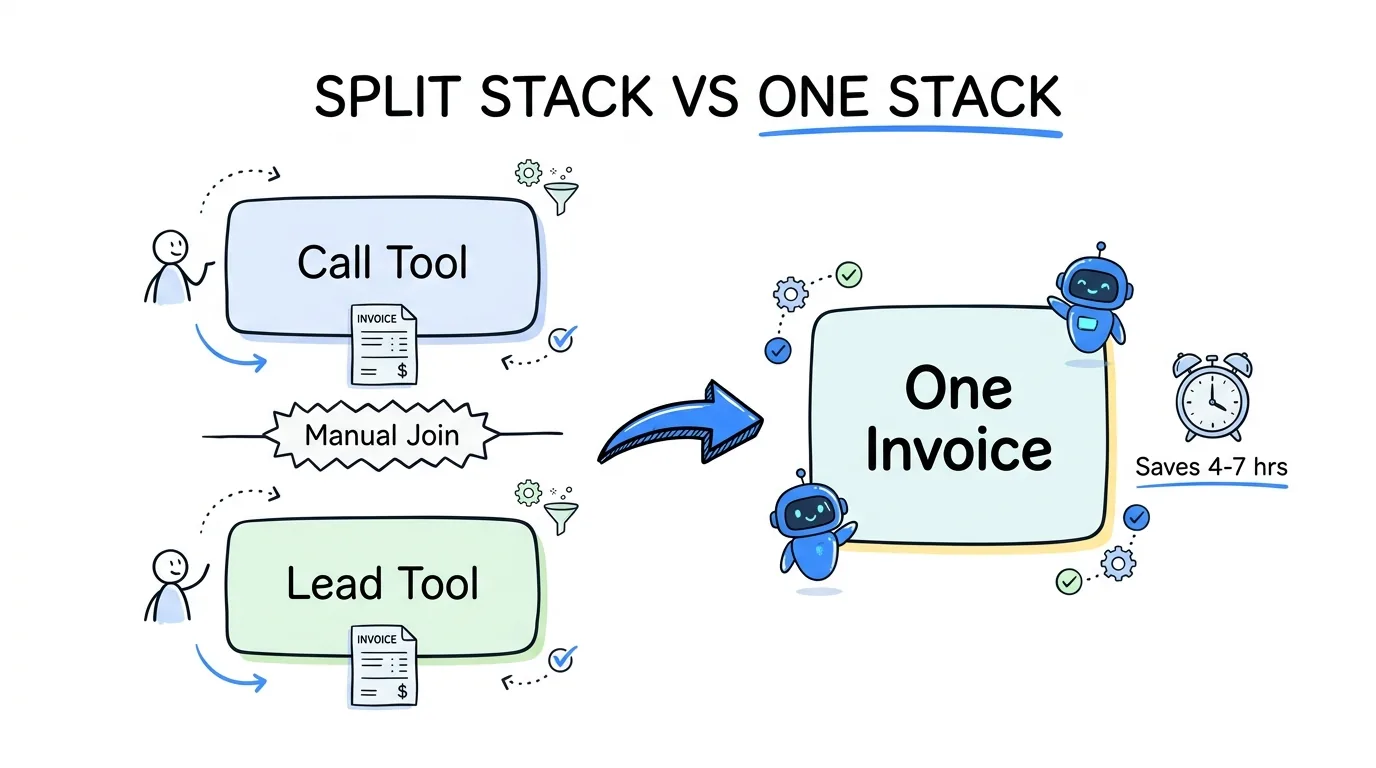
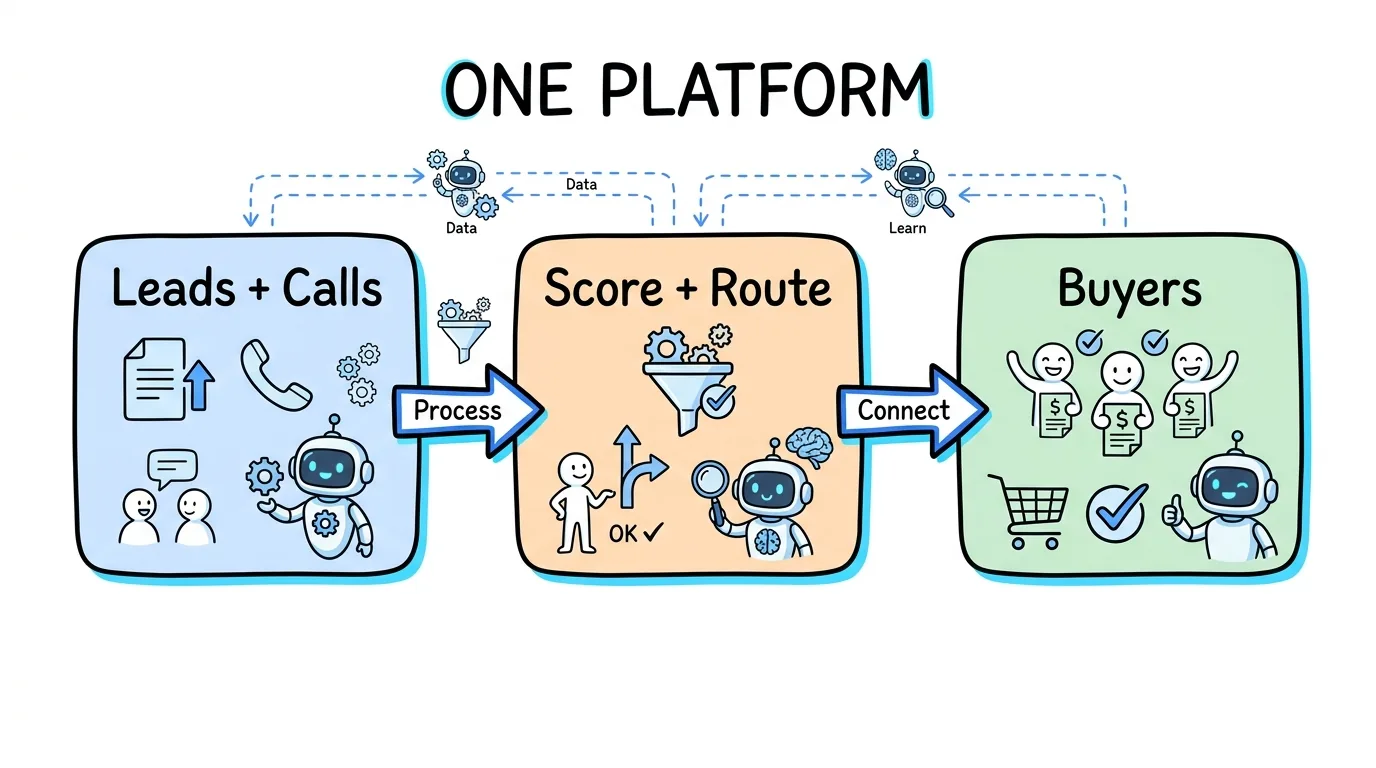
A unified lead and call distribution platform handles five operational surfaces on one stack: inbound call routing software capabilities (ring trees, IVR, dynamic number insertion), web form lead distribution (ping post, direct post, real-time bidding, exclusive vs shared), rule-based scoring on both calls and leads before routing, TCPA compliance capture for both surfaces (TrustedForm for calls, Jornaya LeadiD for leads, both stored against the same buyer record), and unified P&L reporting with RPL, RPC, margin, and buyer-level profitability in one dashboard. The mechanical work of routing a buyer-intent signal to the highest-value destination is identical whether that signal arrives as a phone call or a form submission, so consolidating both into one platform is an obvious efficiency play once the engineering catches up. As Rafael Hernandez, Founder and CEO of Lead Distro AI, puts it: "Calls and leads are the same product with a different delivery mechanism. Treating them as separate categories is a legacy of which vendor built which tool first, not a real operational distinction."
Lead Distro AI vs Ringba Plus a Separate Lead Tool
The table below compares running Lead Distro AI as a unified stack against a Ringba plus LeadProsper combination. The comparison assumes a mid-sized agency doing roughly 2,000 calls and 5,000 web leads per month across three verticals.
| Capability | Lead Distro AI | Ringba + LeadProsper |
|---|---|---|
Inbound call routing software | Yes (ring trees, IVR, lead scoring) | Yes (Ringba) |
| Web form leads handled | Yes (4 routing methods) | Yes (LeadProsper) |
| Unified attribution | Single dashboard, RPL + RPC | Two dashboards |
| Billing | One invoice per buyer | Two systems |
| TCPA audit trail | One database (calls + leads) | Two databases |
| Lead scoring | Applied to both calls and leads | Calls: Not verified; leads: via LeadProsper API Filters |
| Pricing | Flat $297/month | $147 or $297/mo + usage (Ringba) + $500/mo base (LeadProsper), billed monthly, as of September 2026 |
| Integration maintenance | Zero | Integration between two systems |
Not verified: we could not confirm this on the vendor's own website as of September 2026. Check with the vendor.
At list prices, the base subscriptions compare as $297/month for Lead Distro AI versus $647 to $797/month for Ringba (Business or Professional) plus LeadProsper's base plan, before usage on either side (as of September 2026), plus the reconciliation time that goes away with one system. The strategic math favors it harder, because closed-loop attribution across calls and leads is what makes price testing, buyer caps, and quality scoring actually work.
Migration Considerations from Ringba
Switching from Ringba to a unified lead and call distribution software (or any modern call routing software that also handles leads) is mostly a porting exercise rather than a rebuild. Plan to recreate your ring tree logic in Lead Distro AI's ring tree builder. Number pools can port through the carrier account that backs your calls (Lead Distro AI supports BYOC, so you do not have to release your existing numbers). TrustedForm integrations are an API key swap. The two genuine migration costs are buyer notification (give buyers two weeks notice on the new posting URLs) and rebuilding any custom routing logic in Lead Distro AI's rule builder, which typically takes a small operations team three to five days end to end. For a worked migration walkthrough including buyer notification templates, see our best Ringba alternatives guide. To validate fit before migrating, start a free trial and route a small percentage of test traffic before cutting over production volume.
Why Agencies Wait Too Long to Consolidate
Most agencies wait until they hit a billing dispute, a TCPA scare, or a buyer renegotiation to consolidate their stack, and by then they have lost six to twelve months of margin to reconciliation overhead. According to Grand View Research, the global lead management market grew to $5.4 billion in 2025 with a projected 12.3% CAGR through 2030 (Grand View Research, 2025), and platform consolidation is the dominant pattern in mature SaaS categories. The agencies that win the next two years are the ones who treat their tech stack as a profit lever, not a cost center. A unified platform with call routing software and lead distribution under one roof is not a "nice to have"; it is the operational shape of an agency that wants to scale past $200k/month in net revenue without doubling its operations headcount. Compare the unified-stack economics against the alternatives in our pay per call vs pay per lead breakdown, or see how the best call tracking software platforms stack up on their own.
Frequently Asked Questions
What is the best call tracking software for agencies?
For an agency that only tracks calls, CallRail and CallTrackingMetrics are common picks, Invoca leads on AI conversation intelligence for enterprise advertisers, and Ringba and Retreaver lead on pay-per-call ring tree routing, in our view. For an agency that also sells data leads, the better question is which platform handles both, because running a second tool for leads adds a subscription and a manual reporting join. Lead Distro AI routes calls and data leads on one buyer record.
Which platforms handle both lead distribution and call tracking natively?
Lead Distro AI handles both natively. For the other platforms in this comparison, check with each vendor: several call tracking tools also track form fills, and boberdoo says it routes both web leads and inbound calls. Ask for a demo of one buyer receiving both a form lead and a call under one payout and cap. If you sell both calls and leads, start your evaluation with Lead Distro AI.
How much does Lead Distro AI cost?
Call tracking on its own starts at $147 per month, which covers calls and call routing without lead distribution. Full lead distribution starts at $297 per month for the Starter tier, then $497 for Growth, with Scale and higher volume tiers priced by quote; talk to sales. Call tracking usage, meaning the per-number monthly fee and the per-minute inbound rate, bills on top of the flat platform subscription. There is a 7-day free trial and a credit card is required to start it.
Can I use Ringba for web form leads?
Ringba describes itself as an inbound call tracking and analytics platform, and its help center describes a partner integration that turns web leads into phone calls. Confirm with Ringba how it would fit your data lead flow. Lead Distro AI routes both web leads and calls from one account, which avoids the duplicate-stack problem this guide is about.
What is the difference between lead distribution and call routing?
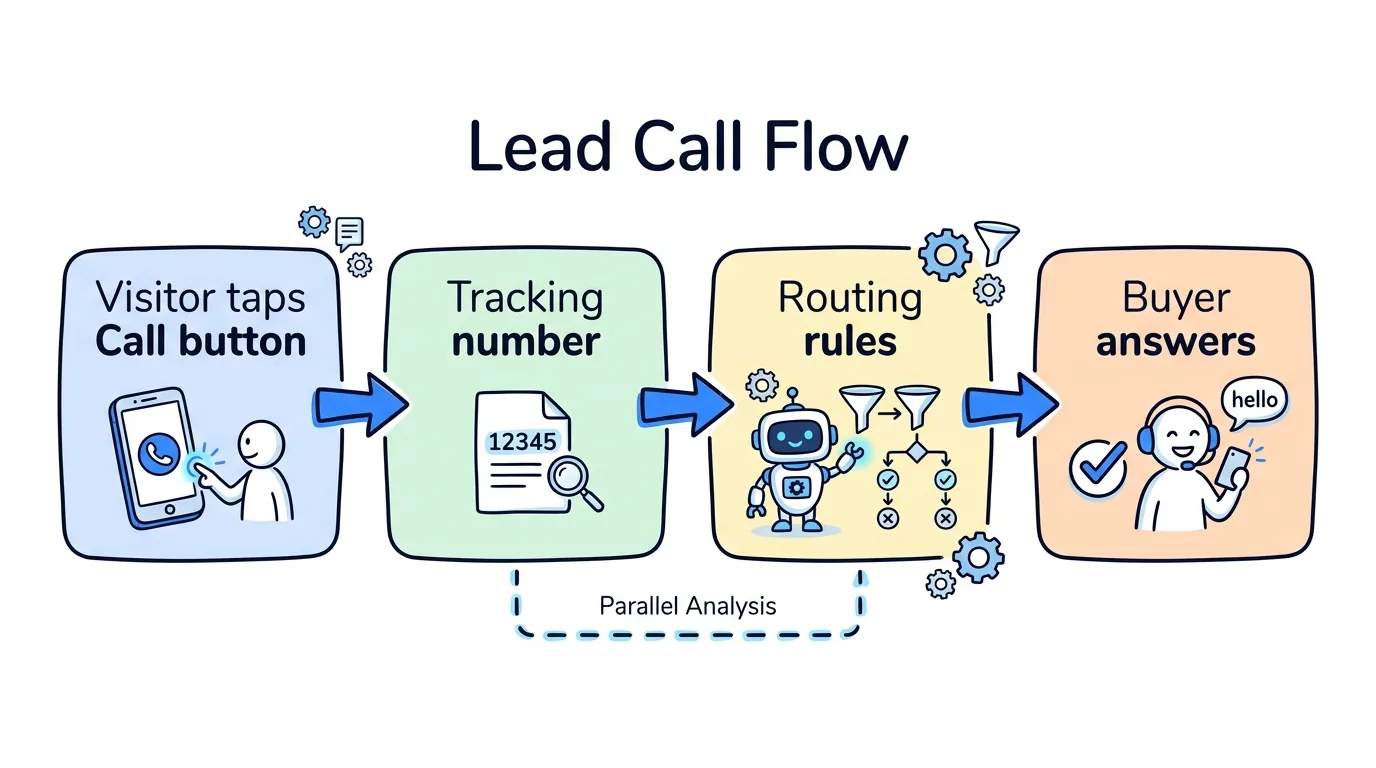
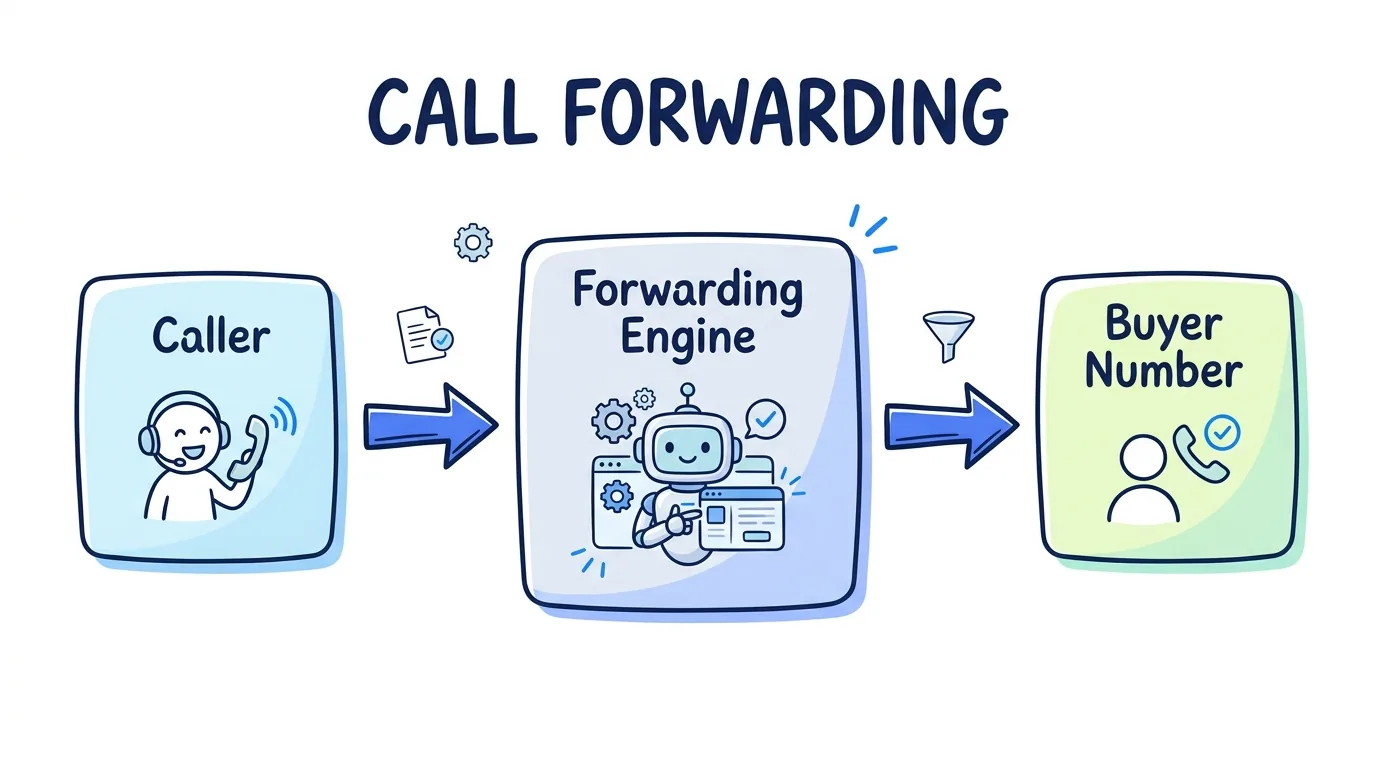
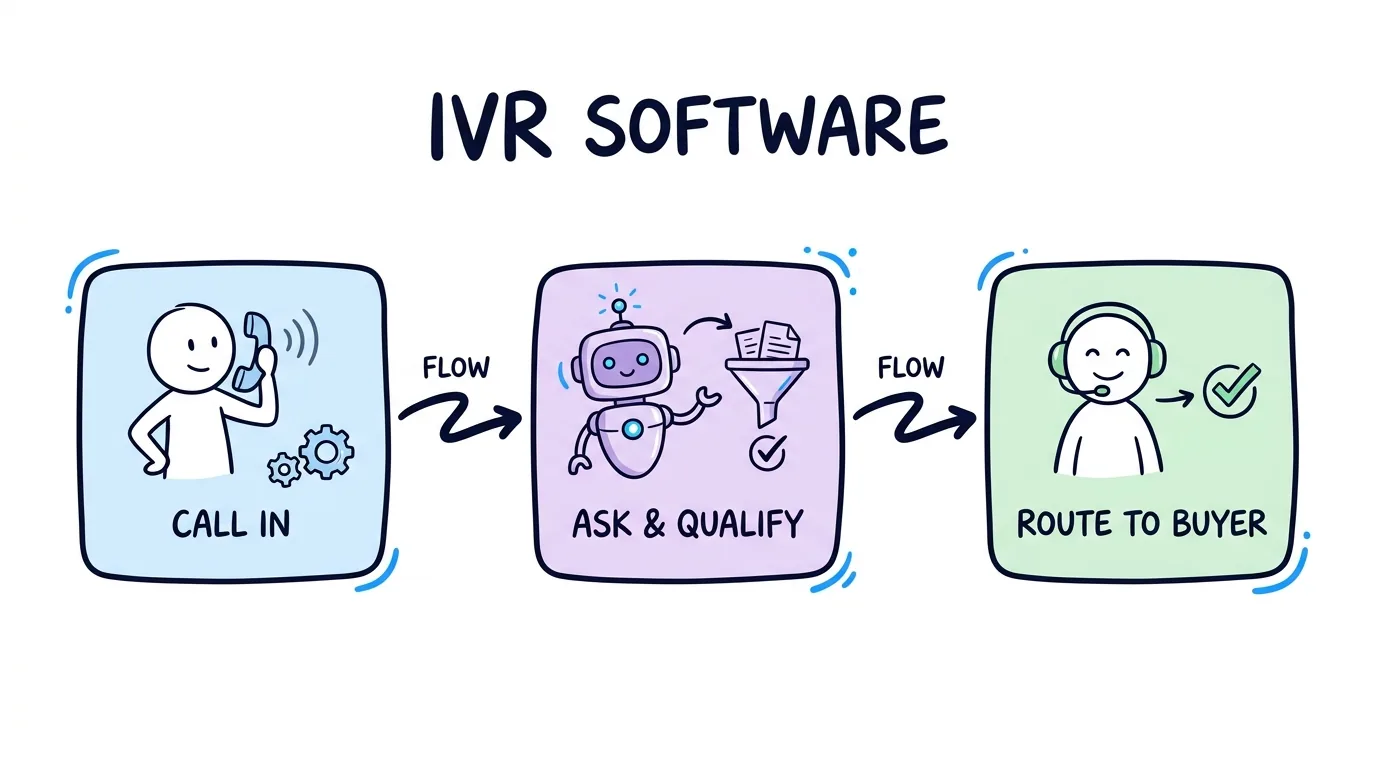
Lead distribution routes web form leads to buyers based on rules, scoring, or real-time bids, typically via HTTP ping post or direct post. Call routing software routes inbound phone calls to buyers using ring trees, IVR, and bid-based target payouts, typically through a pay per call software platform. Mechanically they solve the same problem (route a buyer-intent signal to the highest-value destination), but they evolved as separate product categories because the underlying telephony and web infrastructure were historically built by different vendors.
Do I really need both leads and calls in one platform?
If your agency only sells calls or only sells leads, you can stay on a single-purpose tool. If you sell both, running them on one platform saves four to seven hours weekly in reconciliation, unifies your TCPA audit trail, and makes closed-loop attribution possible. The break-even point where consolidation pays off is around 1,000 calls plus 2,000 leads per month combined.
Will I lose my existing Ringba ring tree configurations if I migrate?
You will rebuild them rather than lose them. Plan to recreate your ring tree logic in Lead Distro AI's rule builder, and you can keep your existing phone numbers through BYOC (bring your own carrier). The genuine migration work is rebuilding custom routing logic and notifying buyers of new posting URLs, which typically takes a small ops team three to five days end to end.
How much does a unified lead and call distribution platform cost compared to running Ringba plus a separate lead tool?
Lead Distro AI, which combines call routing software and lead distribution natively, runs $297/month flat-rate for the unified stack. At list prices, Ringba ($147 or $297/month billed monthly, plus usage) plus a separate lead tool like LeadProsper ($500/month base, billed monthly) comes to $647 to $797/month before usage and overages (as of September 2026), plus the time to maintain the integration between the two systems.
The Bottom Line
Pay-per-lead and pay-per-call agencies running on separate platforms for calls and leads are paying twice for the same operational capability and losing closed-loop attribution in the process. Ringba is a good tool for what it does, but if you sell both calls and data leads, a unified lead and call distribution software like Lead Distro AI consolidates the stack, lowers the base subscription bill ($297/month versus $647 to $797/month for Ringba plus LeadProsper at list prices, as of September 2026), and reclaims reconciliation time every week. See the platform tour or start a free trial to route test traffic through both surfaces before you commit. The agencies that consolidate now will be the ones with the operational margin to scale into 2027.
About the Author
Founder & CEO of Lead Distro AI & Great Marketing AI
UC Berkeley graduate and former software engineer at Microsoft. Rafael built Lead Distro AI after managing over $10M in ad spend for performance marketing agencies (pay-per-lead and pay-per-call), including running campaigns for Neil Patel. He combines deep software engineering expertise with hands-on performance marketing experience to build tools that help these agencies scale profitably.
About Lead Distro AI
Lead Distro AI: AI-Powered Lead Distribution & Call Tracking That Maximizes ROI
The modern platform for pay-per-lead and pay-per-call agencies. Route, score, and deliver leads with AI-powered automation and real-time P&L tracking. Built for performance marketing agencies and lead buyers across legal, insurance, mortgage, solar, and home services verticals.
4 Distribution Methods
Waterfall, Round Robin, Weighted, Ping-Post
Ping-Post Auctions
Real-time bidding with sub-second routing
Real-Time P&L Reporting
Track revenue, costs, and profit per campaign
Call Tracking
Assign tracking numbers, record calls, and attribute conversions
Lead Scoring
Score every lead before routing to maximize conversion
Partner Portal
Self-serve dashboard for buyers to track leads