What Is Lead Distribution Software? The Complete Guide for Pay-Per-Lead Agencies
Learn how lead distribution software automates lead routing, scoring, and delivery for pay-per-lead and pay-per-call agencies. Covers distribution methods, pricing models, and what to look for.

Rafael Hernandez
Founder & CEO
Ex-Microsoft SWE · $10M+ PPL ad spend
I hope you enjoy reading this blog post. If you want to try Lead Distro AI for free, click here.
Author: Rafael Hernandez | Founder & CEO of Lead Distro AI
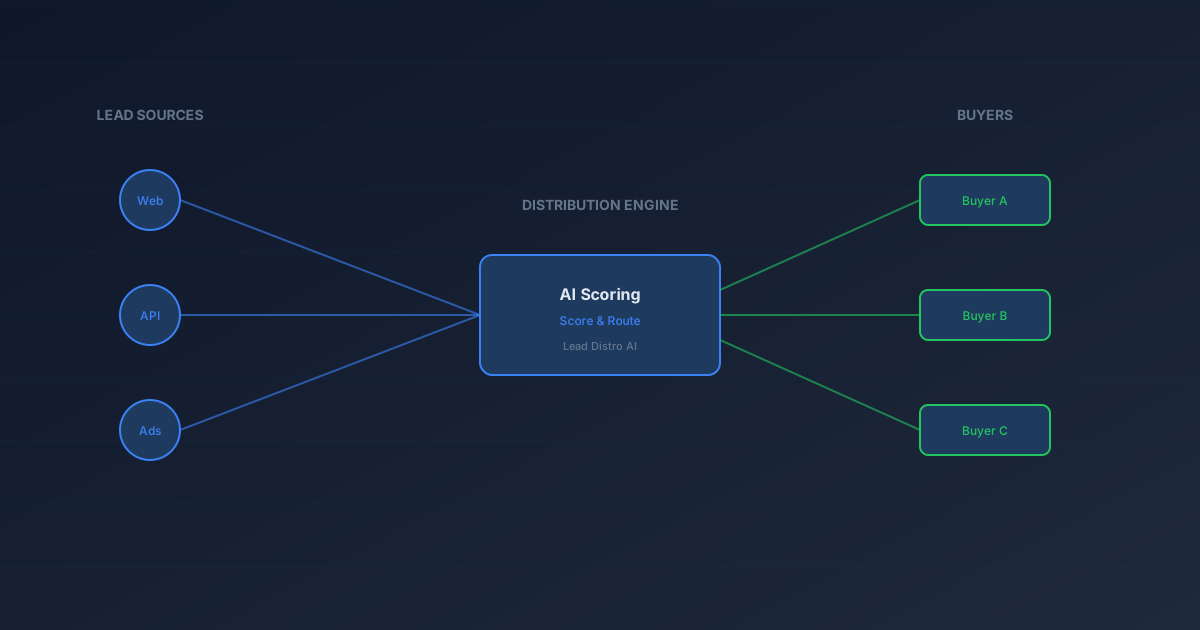
Lead distribution software is a platform that automatically routes incoming leads to the right buyer based on predefined rules like geography, lead type, buyer capacity, and bid price. For pay-per-lead and pay-per-call agencies handling hundreds or thousands of leads daily, it eliminates manual routing, reduces response times to under one second, and ensures every lead reaches the buyer most likely to convert it.
If you're running a pay-per-lead agency, you already know the pain: leads come in from multiple sources, buyers have different caps and filters, and manually routing leads is a recipe for missed revenue. Lead distribution software solves this by automating the entire flow, from the moment a lead is captured to the moment it's delivered to the right buyer. Lead Distro AI automates this entire process with rule-based scoring and four distribution methods.
How Lead Distribution Works
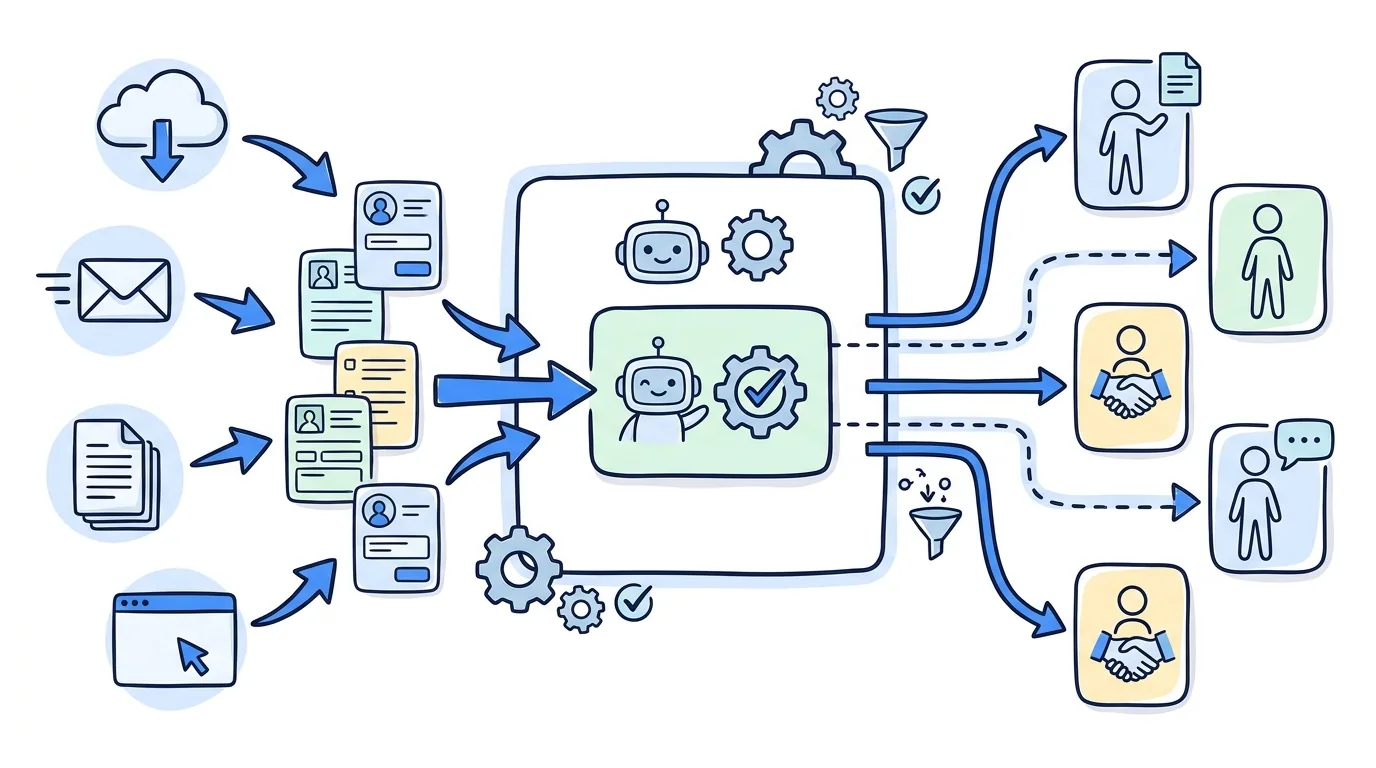
At its core, lead distribution follows a simple loop:
- Ingest: Leads arrive via API, web form, or ad platform integration
- Validate: The system checks for duplicates, missing fields, and data quality
- Score: Rule-based scoring evaluates lead quality
- Route: The lead is matched to the best buyer based on filters, caps, and priority
- Deliver: The lead is sent to the buyer via webhook, email, CRM push, or live transfer
The magic is in step 4, the routing logic. Different distribution methods serve different business models. For a deeper dive into how routing works, read our guide on what is lead routing.
Distribution Methods
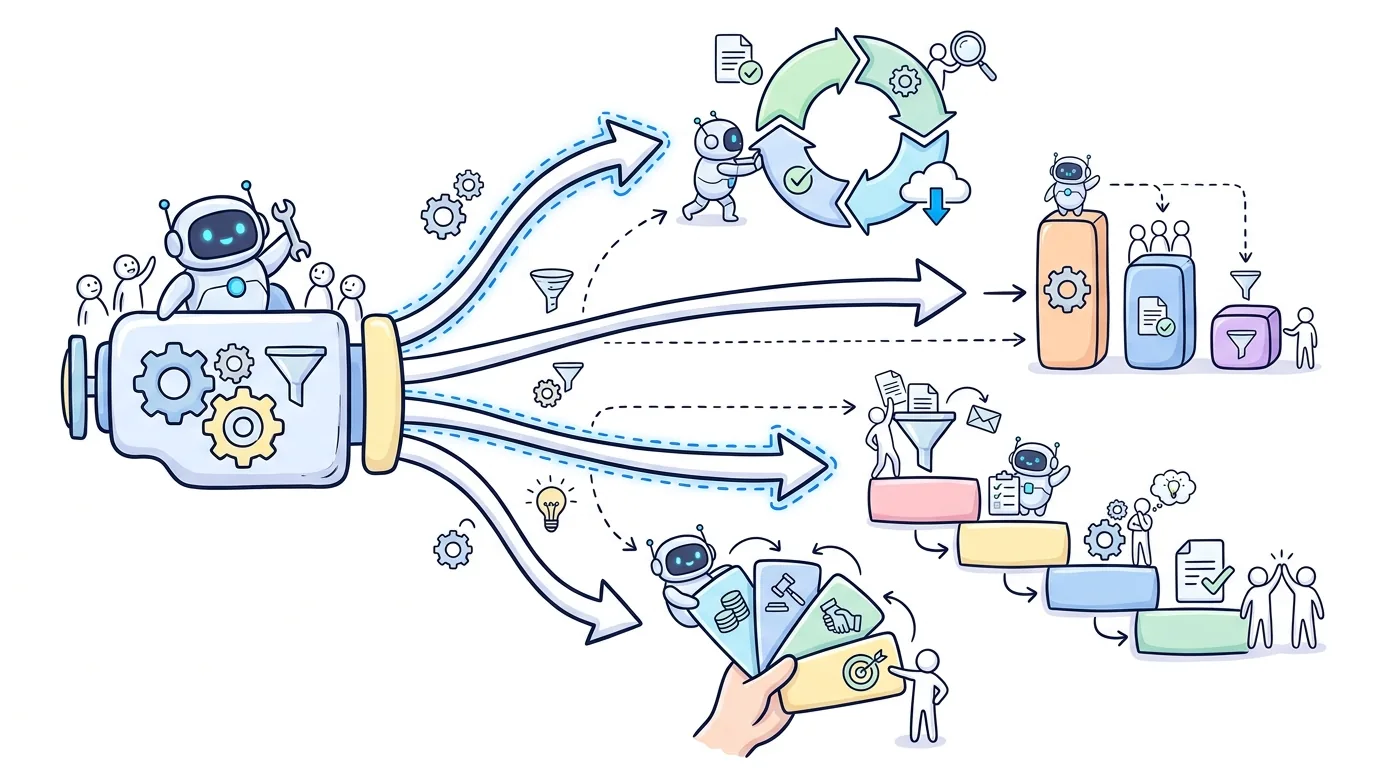
Waterfall (Priority-Based)
Leads go to buyers in a fixed priority order. Buyer #1 gets first dibs. If they reject or are at cap, it falls to Buyer #2, and so on.
Best for: Exclusive lead sales where your top buyer pays a premium for first access.
Round Robin
Leads rotate evenly across all active buyers. Everyone gets a fair share.
Best for: Shared lead campaigns where fairness matters more than maximizing per-lead revenue.
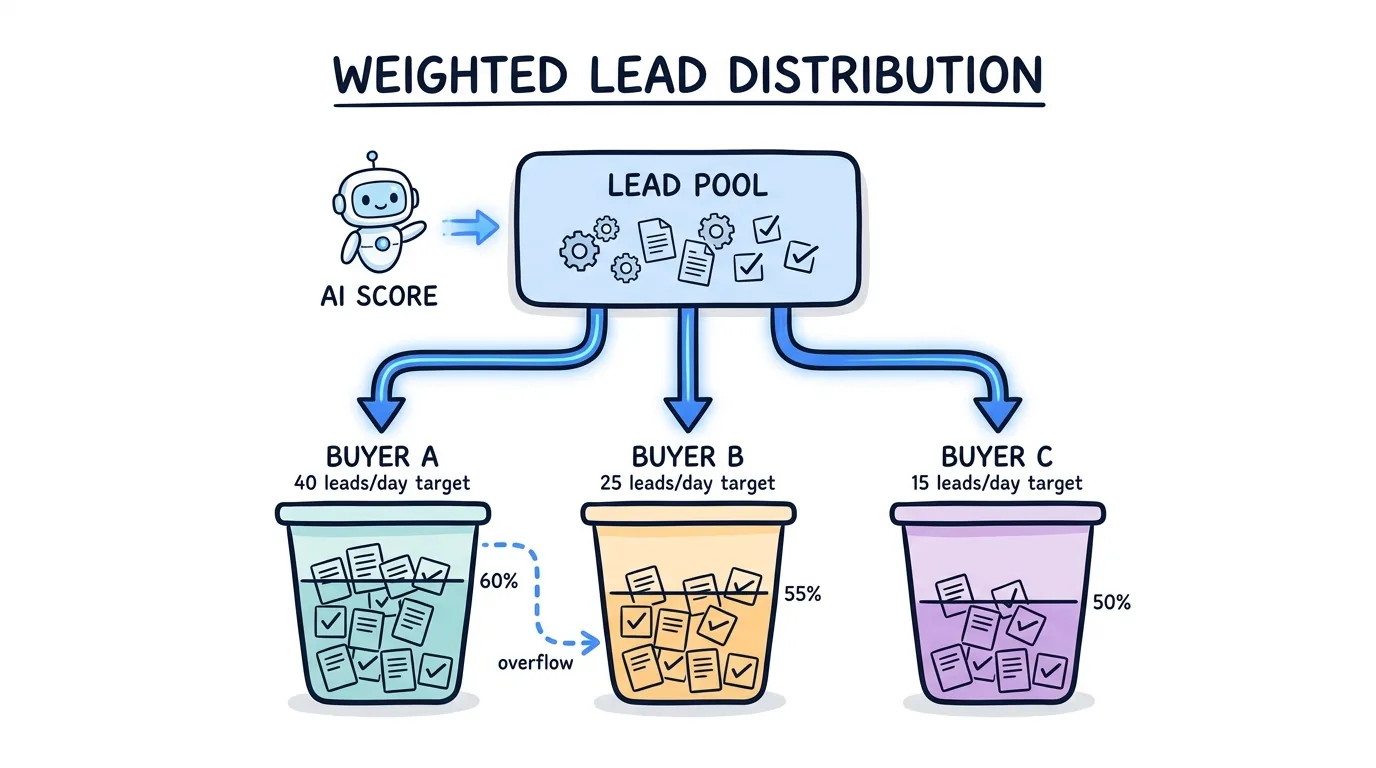
Weighted Distribution
Similar to round robin, but buyers with higher weights get proportionally more leads. A buyer with weight 3 gets three times more leads than a buyer with weight 1.
Best for: Campaigns where some buyers want more volume and are willing to pay for it.
Ping-Post
The most sophisticated method. When a lead comes in, the system "pings" all eligible buyers with partial lead data. Buyers respond with a bid (or accept/reject). The highest bidder wins the lead and receives the full data in the "post."
Best for: Maximizing revenue per lead in competitive markets. Common in insurance, legal, and home services. See how Lead Distro AI handles ping-post bidding in the interactive product tour.
What to Look For in Lead Distribution Software
Not all platforms are created equal. Here's what separates good from great:
- Real-time routing: Leads lose value fast. Seconds matter.
- Flexible filters: Buyers need to filter by geography, lead type, time of day, and custom fields.
- Cap management: Daily, weekly, and monthly caps per buyer to prevent oversaturation.
- Duplicate detection: Catch duplicates by phone, email, or custom fields before they cost you money.
- Cost tracking: Know your cost per lead from every source, including ad spend attribution. Use the lead pricing calculator to estimate your margins.
- Lead scoring: Predict lead quality before routing, so your best leads go to your best buyers.
- Live transfers: For pay-per-call, the ability to qualify leads by phone and transfer them live.
Not sure which platform to choose? Check out our comparison of the best lead distribution software for a side-by-side breakdown.
FAQ
What is lead distribution software?
Lead distribution software is a platform that automatically routes incoming leads from sources like web forms, landing pages, and ad campaigns to the right buyers or sales reps based on predefined rules. These rules can include geography, lead type, buyer capacity, daily caps, and bid price. The software eliminates manual lead assignment, reduces response times, and ensures every lead reaches the most appropriate buyer.
What are the main distribution methods?
The four primary distribution methods are waterfall (priority-based routing where leads cascade through a ranked buyer list), round robin (even rotation across all buyers), weighted distribution (proportional allocation based on buyer weights), and ping-post (real-time bidding where buyers compete for each lead). Each method suits different business models and pricing structures.
How much does lead distribution software cost?
Pricing varies by platform. Some charge per lead processed (starting around $0.02 per lead), while others use monthly subscriptions based on volume. Lead Distro AI offers plans starting at $297/month for up to 2,500 leads, with a $497 tier for higher volume. Scale and enterprise pricing for operations above that is priced by quote; talk to sales. See all pricing details.
Do I need lead distribution software for my agency?
If you are handling more than 50 leads per day across multiple buyers, manual routing becomes unsustainable. Lead distribution software pays for itself by reducing response times (sub-second delivery vs. minutes or hours), eliminating duplicate leads, enforcing buyer caps automatically, and providing profit visibility per campaign and source.
What is lead distribution?
Lead distribution is the process of routing incoming leads to the right buyer, sales rep, or agent based on rules like geography, lead type, buyer capacity, and bid price. It is the mechanism that turns raw inbound leads into matched, deliverable product for the buyer who is most likely to convert them. In pay-per-lead and pay-per-call businesses, lead distribution is the core revenue engine because the lead is the product, and every lead routed to the wrong buyer is lost revenue. Effective lead distribution depends on four things: clean lead data, clear buyer filters, real-time delivery (under one second), and automated cap management so no buyer gets oversold.
What is the difference between lead distribution and lead generation?
Lead generation is the process of creating new leads through paid ads, SEO, referrals, partnerships, or purchased traffic. Lead distribution is what happens after a lead is generated: routing it to the buyer who will pay the most and convert the highest. Most successful pay-per-lead operations treat them as two separate functions: a generation team optimizes cost per lead, and a distribution system optimizes revenue per lead. A healthy operation has tight feedback loops between both sides so underperforming generation sources get paused and underperforming buyers get de-prioritized automatically.
Can lead distribution software integrate with my existing tools?
Yes. Modern platforms support webhook delivery, REST APIs, and native integrations with CRMs like Salesforce, HubSpot, and GoHighLevel. Lead Distro AI also integrates with Google Sheets, Stripe for billing, Meta for ad spend tracking, and Slack for notifications. Check the documentation for full integration details.
The Bottom Line
Lead distribution software is the backbone of any serious pay-per-lead operation. Without it, you're leaving money on the table with every lead that gets routed to the wrong buyer or delivered too slowly. If you are new to the industry, our lead distribution glossary defines every term you will encounter when buying, selling, and routing leads.
The best systems pay for themselves within weeks by increasing acceptance rates, reducing wasted leads, and giving you the data to optimize your entire pipeline. For a side-by-side comparison of the top routing-first tools, see our best lead routing software guide covering the 7 platforms ranked by lead scoring, routing methods, and integration depth.
Ready to see how AI-powered lead distribution works? Start your free trial and route your first lead in minutes.
About the Author
Founder & CEO of Lead Distro AI & Great Marketing AI
UC Berkeley graduate and former software engineer at Microsoft. Rafael built Lead Distro AI after managing over $10M in ad spend for performance marketing agencies (pay-per-lead and pay-per-call), including running campaigns for Neil Patel. He combines deep software engineering expertise with hands-on performance marketing experience to build tools that help these agencies scale profitably.
About Lead Distro AI
Lead Distro AI: AI-Powered Lead Distribution & Call Tracking That Maximizes ROI
The modern platform for pay-per-lead and pay-per-call agencies. Route, score, and deliver leads with AI-powered automation and real-time P&L tracking. Built for performance marketing agencies and lead buyers across legal, insurance, mortgage, solar, and home services verticals.
4 Distribution Methods
Waterfall, Round Robin, Weighted, Ping-Post
Ping-Post Auctions
Real-time bidding with sub-second routing
Real-Time P&L Reporting
Track revenue, costs, and profit per campaign
Call Tracking
Assign tracking numbers, record calls, and attribute conversions
Lead Scoring
Score every lead before routing to maximize conversion
Partner Portal
Self-serve dashboard for buyers to track leads